
SLM

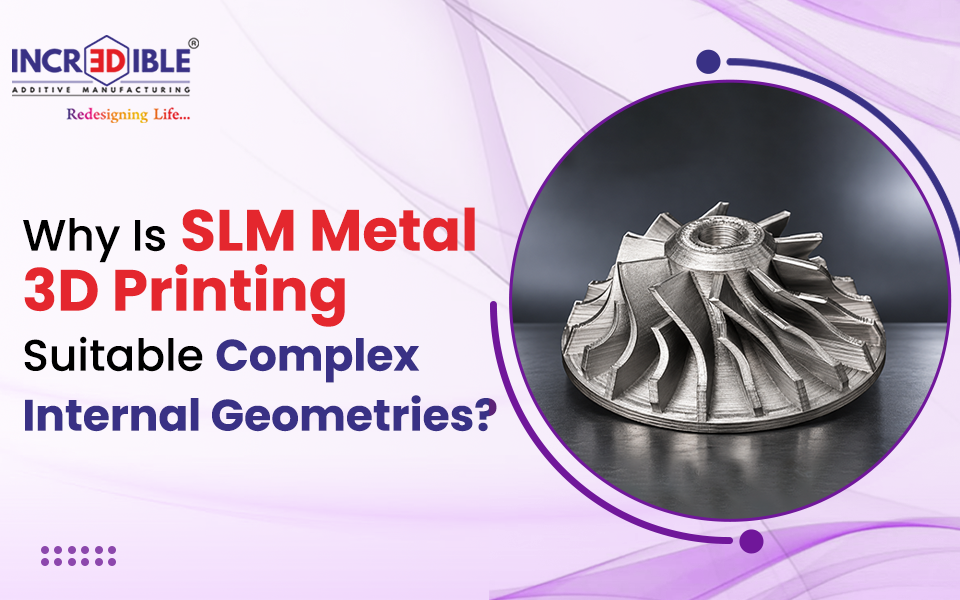
Modern engineering industries are constantly searching for manufacturing methods that can deliver precision, durability, and design freedom without compromising performance. This is where Selective Laser Melting (SLM) stands out. Unlike traditional manufacturing processes that remove material from a solid block, SLM builds components layer by layer using metal powder and a high-powered laser. This approach enables engineers to create advanced geometries that would be difficult or impossible to achieve through conventional methods, making SLM 3D Printing a preferred choice for high-performance engineering applications.

“SLM does not simply create parts—it enables engineers to design components around performance rather than manufacturing limitations.”

Complex Designs Without Manufacturing Constraints

Many engineering challenges arise because traditional manufacturing methods limit design possibilities. SLM changes this by allowing engineers to create intricate internal structures, optimized cooling channels, and highly detailed geometries while maintaining structural integrity.

Before looking at specific advantages, it is important to understand how Selective Laser Melting gives designers more freedom during product development.

  • Internal cooling channels for aerospace and high-temperature engineering applications
  • Lattice structures that improve performance while maintaining mechanical strength
  • Single-piece assemblies replace multiple components and reduce assembly complexity.
  • Customized geometries designed specifically for unique engineering requirements

Why Material Performance Matters in Critical Applications

Engineering components often operate in demanding environments involving high temperatures, pressure, vibration, or mechanical stress. SLM works effectively because it fully melts metal powder, creating dense parts with excellent mechanical properties.

A good example is aerospace fuel nozzles, where complex internal pathways improve fuel flow and combustion efficiency. Similarly, turbomachinery components benefit from geometries that optimize performance while maintaining reliability. Because SLM builds parts directly from digital designs, engineers can focus on achieving performance targets rather than working around manufacturing limitations through advanced Metal 3D Printing.

Faster Innovation and Prototyping Cycles

Product development often slows down when multiple prototypes are required. SLM shortens this cycle by allowing the rapid production of functional metal parts directly from CAD models.

Manufacturers can test, evaluate, and refine designs more quickly before moving into full-scale production.

  • Rapid design validation through functional metal prototype production
  • Shorter development cycles compared with conventional tooling-dependent methods
  • Quick design modifications without expensive mold or tooling changes
  • Faster product launches supporting competitive engineering environments

“The ability to move from digital design to functional metal component in days can significantly accelerate engineering innovation.”

Real-World Engineering Applications

SLM is already being used across industries where component performance directly impacts operational success. Engineers increasingly rely on this technology to solve complex manufacturing challenges while improving reliability and efficiency through Industrial 3D printing.

For example, rocket engine components, heat exchangers, medical implants, and motorsport performance parts often contain features that are difficult to manufacture using traditional methods. SLM enables these advanced designs while maintaining the precision required for mission-critical applications.

“When performance, precision, and design flexibility are equally important, SLM provides a practical path to achieving all three.”

Key Benefits

  • Superior Design Freedom

SLM enables engineers to create complex internal and external geometries that would be difficult, costly, or impossible to manufacture using conventional machining techniques.

  • High Material Density

The laser fully melts metal powder, producing components with excellent structural integrity and mechanical properties suitable for demanding engineering environments.

  • Faster Product Development

Direct production from digital models accelerates prototyping, testing, and design improvements, helping companies bring innovative products to market sooner.

  • Part Consolidation

Multiple components can often be combined into a single part, simplifying assembly processes and improving overall system reliability.

  • Application Versatility

SLM supports a wide range of industries, including aerospace, energy, automotive, medical, and industrial manufacturing sectors.

Conclusion

Selective Laser Melting is ideal for high-performance engineering components because it focuses on how a part performs rather than how easily it can be manufactured. By enabling complex geometries, delivering strong material properties, and accelerating innovation, SLM helps engineers solve challenges that traditional manufacturing methods struggle to address.

Key Takeaways

  • Greater design freedom for advanced engineering solutions
  • Excellent mechanical performance for demanding applications
  • Faster prototyping and development cycles
  • Reduced assembly complexity through part consolidation
  • Proven success across aerospace, energy, medical, and motorsport industries

The real advantage of SLM is that it allows engineers to design components around performance goals, not manufacturing limitations. For organizations seeking advanced metal additive manufacturing solutions and SLM for High-Performance Components, consider Incredible 3D for high-quality SLM expertise and engineering support.

June 23, 2026
Why SLM is Ideal for High-Performance Engineering Components

Why SLM is Ideal for High-Performance Engineering Components

Modern engineering industries are constantly searching for manufacturing methods that can deliver precision, durability, and design freedom without compromising performance. This is where Selective Laser Melting (SLM) stands out. Unlike […]
June 12, 2026
From Prototype to Production How to Choose Between FDM, SLA, SLS, and MJF

From Prototype to Production: How to Choose Between FDM, SLA, SLS & MJF

https://youtu.be/rgEGZtwtSfc?si=AcxbQctG6c7Otw-z There are several plastic 3D printing technologies available today, each designed for different goals. Some methods prioritize affordability and fast prototyping, while others focus on surface quality, precision, strength, […]
June 12, 2026
How Lattice Structures are Changing Aerospace Design

How Lattice Structures are Changing Aerospace Design

Modern aerospace design is no longer focused solely on making parts stronger. Engineers are increasingly tasked with creating components that deliver high performance while reducing structural mass, improving efficiency, and […]
May 30, 2026
Why Surgeons Are Choosing 3D Printed Custom Hip Implants Over Off-the-Shelf

Why Surgeons Are Choosing 3D Printed Custom Hip Implants Over Off-the-Shelf

https://youtu.be/0D9jgCuw43Q?si=Xxwxicx5GMChuhgq While hip replacement surgery has been successful for millions of people who’ve been able to move and be pain-free, not all patients’ body structures are compatible with a standard […]
May 30, 2026
When Is a Patient-Specific TMJ Implant the Right Choice

 When Is a Patient-Specific TMJ Implant the Right Choice?

Jaw pain can impact more than just eating and speaking. In some patients, TMJ disorders are so bad that they cause continuous pain, headaches, trouble with chewing and sometimes, even […]
April 22, 2026
Advancing EV Performance The Role of Metal 3D Printing in Component Design

Advancing EV Performance: The Role of Metal 3D Printing in Component Design

Electric cars are transforming the mode of transportation, though enhancing their performance is still a huge task. EV manufacturers are in a continuous pursuit to ensure that the vehicles are […]
Contact Us
WhatsApp chat
Become Channel Partner