Every orthopaedic case presents a different challenge because no two patients have exactly the same bone structure. Traditional implants may need adjustments during surgery, while 3D printing Orthopaedic Implant allows implants to be designed around the patient’s anatomy from the beginning. Using CT or MRI data, surgeons and manufacturers can create precise digital models and turn them into customized implants. This approach is helping modern orthopaedics address complex bone defects while supporting better surgical planning, fit, and functionality.
“Modern implant design is moving from choosing the closest available fit to creating a solution around the patient.”
1. Designing Implants Around Individual Anatomy
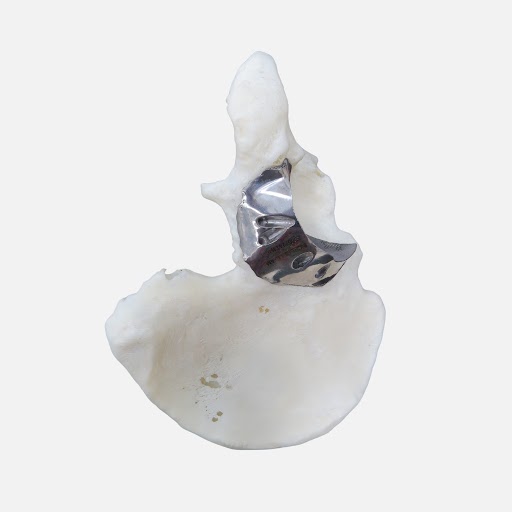
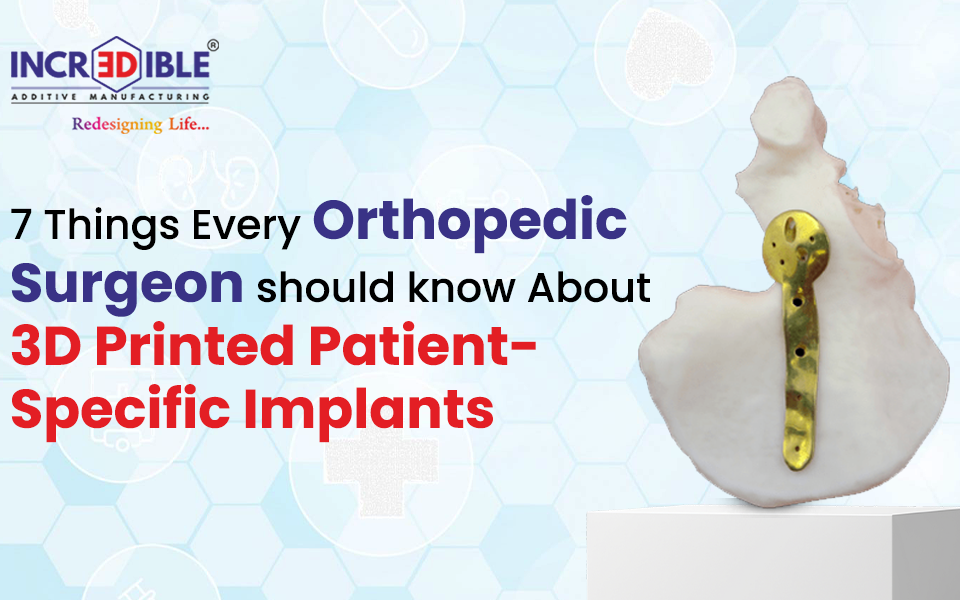
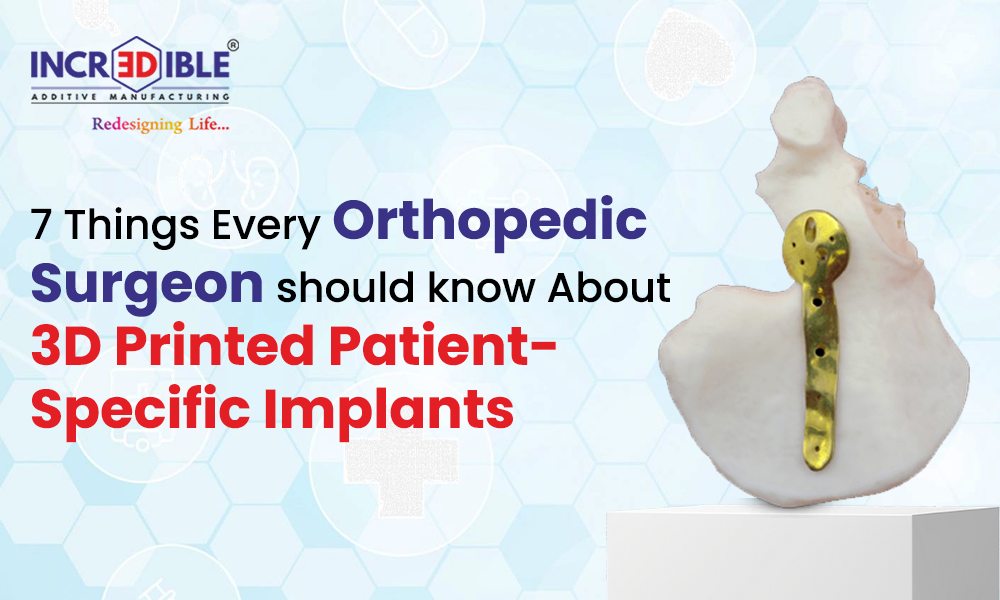
A Patient-Specific Orthopaedic Implant starts with the patient’s anatomical data. CT scans can help create a detailed 3D model of the affected bone, which is then used to develop an implant that matches the required shape and dimensions.
This is particularly useful when a patient has an unusual bone defect that cannot be easily addressed with standard implant sizes.
Example: A patient undergoing pelvic reconstruction after severe trauma may require an implant designed around an irregular bone defect rather than a conventional shape.
Precise anatomical fit: The implant is developed according to the patient’s individual bone structure.
Complex geometry: Additive manufacturing can create shapes that are difficult to produce through conventional methods.
Functional restoration: Customized designs can support the intended movement and structural requirements of the affected area.
“When bone anatomy is unique, implant design can be just as unique.”
2. Improving Surgical Planning and Precision
3D printing contributes to orthopaedic surgery even before the implant reaches the operating room. Digital models and 3D-printed anatomical replicas allow surgeons to understand difficult cases, identify potential challenges, and plan the procedure in advance.
For example, in complex joint reconstruction, a physical model can help the surgical team study the affected anatomy and determine the most suitable approach before surgery begins.
Better preparation: Surgeons can study the patient’s anatomy before the procedure.
Fewer adjustments: Customized implants can limit extensive reshaping during surgery.
Greater precision: Digital planning helps guide implant positioning and surgical decisions.
3. Making Complex Implant Designs Possible
One of the biggest contributions of 3D printing is design freedom. A 3D Printing Orthopaedic Implant can include intricate curves, porous structures, and lattice patterns that may be difficult to manufacture using traditional techniques.
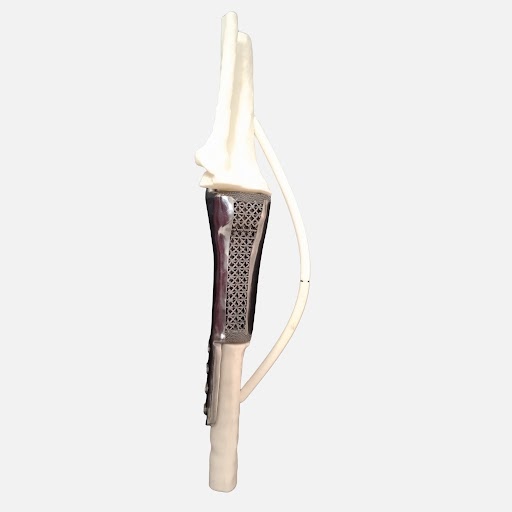
These structures can be particularly valuable when reconstruction involves significant bone loss. Porous surfaces can also be designed to support bone ingrowth and implant fixation where clinically appropriate.
For example, in reconstruction following tumor removal, a customized titanium implant can be designed to replace the missing bone while following the surrounding anatomy.
“The advantage of 3D printing is not simply how an implant is made, but what the design can achieve.”
Key Benefits
Personalized Fit: Implants designed from patient scans can closely match individual anatomy, helping surgeons address unusual defects that standard implant sizes may not accommodate.
Design Freedom: Additive manufacturing supports intricate geometries, allowing customized curves, lattice structures, and porous surfaces for demanding orthopaedic applications.
Better Planning: Digital models and anatomical replicas help surgical teams understand complex cases and prepare the procedure before entering the operating room.
Complex Reconstruction: Customized implants can address challenging defects caused by trauma, tumor removal, revision procedures, or substantial bone loss.
Potential Bone Integration: Carefully designed porous structures can encourage bone ingrowth, supporting biological fixation and long-term implant stability when clinically appropriate.
Material Flexibility: Materials such as titanium alloys can provide the strength, durability, and biocompatibility required for several orthopaedic implant applications.
Conclusion
3D printing is changing modern orthopaedic implant design by bringing personalization, precision, and design flexibility into a single manufacturing process. Instead of adapting every patient to a standard implant, the implant can be developed around the patient’s anatomy.
Key Takeaways
Patient anatomy guides implant design.
Digital planning improves surgical preparation.
Complex bone defects can receive customized solutions.
Porous structures can support biological fixation.
Personalized implants can support both function and reconstruction.
The strongest takeaway is that 3D printing makes precision more achievable in complex orthopaedic care, giving surgeons greater flexibility when conventional implant designs are not enough. For customized solutions, 3D Medical combines digital design and advanced manufacturing to support patient-specific orthopaedic implant development.