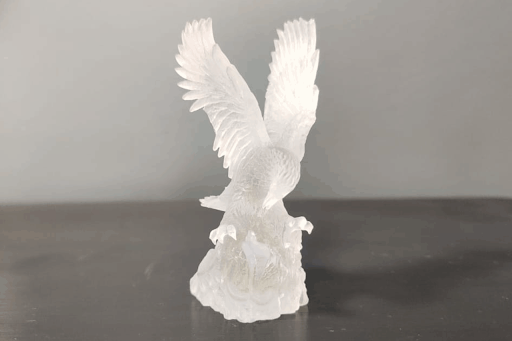
When a product needs tiny features, sharp edges, and a polished appearance, SLA 3D Printing often becomes the preferred choice. Unlike methods that deposit or fuse material layer by layer, SLA uses light to cure liquid photopolymer resin with exceptional control. This creates highly accurate parts with fine details and naturally smooth surfaces. From dental models to jewelry patterns and product prototypes, SLA helps turn detailed digital designs into physical parts that closely match the original CAD model.
“SLA turns liquid resin into highly detailed parts with impressive precision and surface quality.”
How Does SLA Create Such Fine Details?
SLA works through a process called photopolymerization. A laser or light source selectively cures liquid resin according to each sliced section of the digital design. The platform then moves, allowing the next layer to form over the previous one.
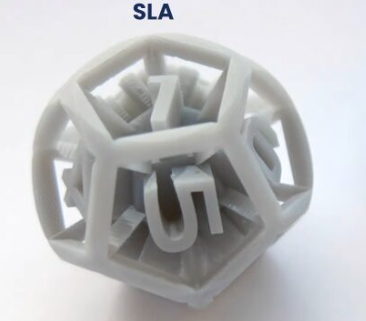
Because the light can be controlled with great precision, SLA can reproduce tiny features, curved surfaces, thin walls, and intricate patterns that may be difficult with other printing methods.
The process can be visualized through applications such as:
Dental models: Fine tooth structures and smooth surfaces support accurate dental planning and model creation.
Jewelry patterns: Intricate rings and ornamental designs can be reproduced with sharp, clean features.
Why Does SLA Produce Smoother Surface Finishes?
SLA’s surface quality comes from its fine layer resolution and controlled curing process. Each layer is formed precisely against the previous one, creating smaller visible layer lines than many filament-based printing methods.
This is particularly useful when the appearance and feel of a prototype matter. For example, a consumer-product designer developing an ergonomic handle can use SLA to inspect curves, edges, textures, and proportions without extensive surface finishing.
These qualities make plastic 3D printing services particularly useful for prototypes where appearance and detail need to be evaluated together.
Fine layer resolution: Smaller layers create smoother transitions across curved and detailed surfaces.
Minimal visible layering: Fine details remain clearer because the finished surface shows less pronounced layer texture.
“For prototypes where appearance matters as much as accuracy, SLA can provide a near-finished look directly from the printer.”
What Makes SLA Suitable for High-Detail Industrial Applications?
SLA is particularly valuable when visual accuracy, dimensional precision, and surface finish are important. Its ability to work with different photopolymer resins also makes it useful for specialized prototypes and models.
Medical and dental industries use SLA for surgical guides, dental models, and anatomical replicas, while engineering teams can use it for detailed housings, casting patterns, and presentation prototypes. This makes high-detail 3D printing useful when designers need to inspect complex parts before moving toward final production.
The process also supports applications such as consumer-product prototypes, where designers need to examine the shape, ergonomics, and appearance of a component before investing in tooling.
“The strength of SLA lies in controlling both the smallest design features and the final surface appearance.”
Key Benefits
High Detail:SLA printing technology can reproduce tiny design features, sharp edges, intricate patterns, and complex geometries with excellent accuracy.
Smooth Surfaces: Fine printing layers create cleaner surfaces, making prototypes more suitable for visual inspection and presentation.
Dimensional Accuracy: Controlled photopolymerization helps produce parts that closely follow the dimensions of the original digital design.
Material Flexibility: Different resins can provide properties such as transparency, flexibility, durability, or biocompatibility for specific applications.
Complex Designs: SLA can produce intricate structures and delicate geometries that may be challenging with conventional manufacturing techniques.
Conclusion
SLA is preferred for high-detail and smooth surface finishes because its light-based photopolymerization process provides precise control over how each resin layer is cured.
Exceptional detail for intricate designs and tiny features.
Smooth finishes with less visible layer texture.
Accurate prototypes that closely follow CAD designs.
Versatile resin options for different application requirements.
For businesses seeking detailed prototypes and high-quality 3D printed components, 3D Incredible can provide a professional solution for precision-focused 3D printing requirements.