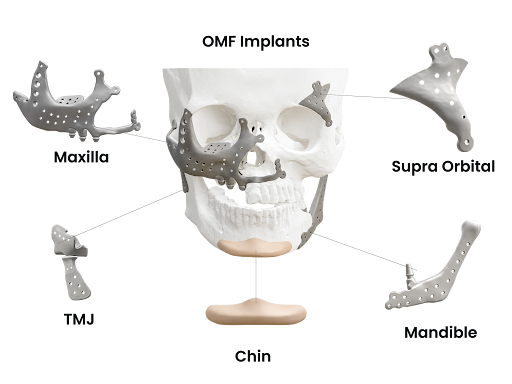
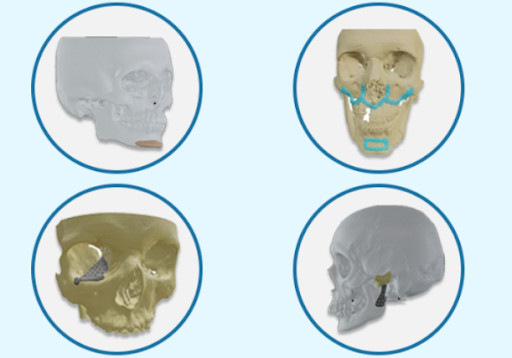
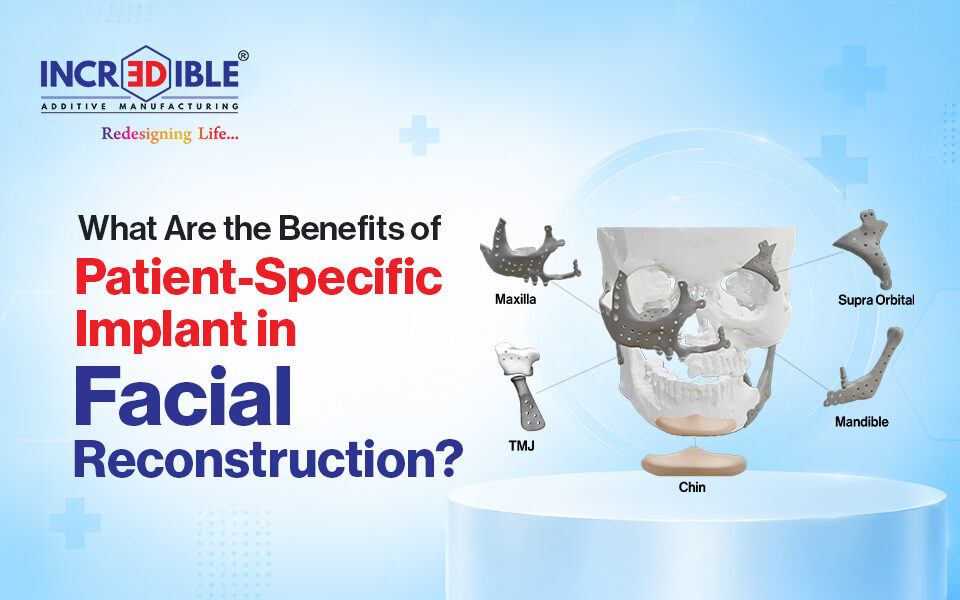
Reconstructing the jaw and face is one of the most challenging medical issues of today. The facial morphology of each patient is different, and it is important to achieve precision and individuality in treatment. Today, artificial intelligence (AI) and 3D printers are changing the way 3D printed maxillofacial implants are being designed, helping surgeons to create personalized implants, improve surgical planning, and deliver better functional and aesthetic outcomes.
“When AI meets 3D printing, maxillofacial reconstruction becomes smarter, faster, and truly patient-specific.”
AI Makes Implant Design Smarter from the Start
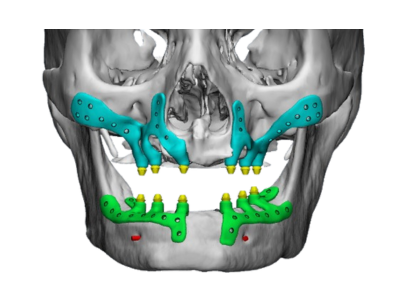
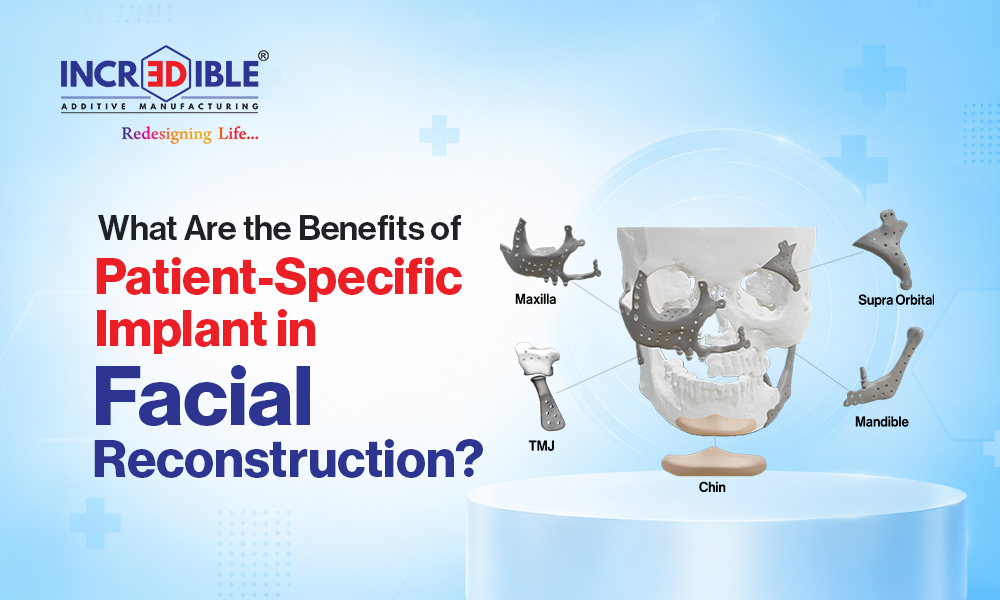
Instead of relying solely on manual planning, AI analyzes CT scans, facial symmetry, and anatomical data to recommend implant designs tailored to each patient. It can also identify scan inconsistencies and optimize implant geometry before manufacturing begins. Example: In mandibular (jaw) reconstruction following cancer surgery, AI-assisted planning helps recreate natural jaw contours, improving both facial appearance and chewing function.
3D Printing Turns Digital Designs into Patient-Specific Implant
Once the digital model is finalized, 3D printing transforms it into a highly customized implant that matches the patient’s anatomy with exceptional accuracy. This digital workflow minimizes the need for repeated adjustments during surgery and improves overall surgical efficiency with 3D printed implants.
This approach allows surgeons to benefit from:
Custom-fit implants designed directly from patient imaging.
Patient-specific surgical guides for precise implant placement.
Faster production compared to conventional custom manufacturing.
Better Planning Leads to Better Surgical Outcomes
Complex facial reconstruction demands careful preparation. AI-powered planning software allows surgeons to simulate procedures, evaluate implant positioning, and anticipate challenges before entering the operating room.
Example: During orbital floor reconstruction after facial trauma, virtual surgical planning helps surgeons restore eye socket symmetry while protecting surrounding structures.
“The more accurate the planning, the greater the confidence in every surgical decision.”
AI Improves Precision Throughout the Digital Workflow
AI does much more than just diagnosis. It constantly updates the implant designs, has the ability to predict the anatomical alignment, assesses the bite relationships, and provides design correctness before manufacturing. This smart workflow can be used to support:
Evolution of more symmetric shapes for function and aesthetics.
Make the design more accurate by removing inaccuracies in the scan.
High standard of implant quality and optimized manufacturing parameters. “AI doesn’t replace clinical expertise—it strengthens every decision leading to personalized reconstruction.”
Key Benefits
Highly personalized implants: AI and 3D Printing allow for the creation of highly personalized implants, improving the fit and precision of the surgery and results for the patient.
Better surgical planning: Digital simulations and patient-specific guides allow the surgeon to better plan complex procedures and to minimize unexpected problems in surgery.
Digital design and additive manufacturing also shorten the production time for custom maxillofacial implants compared to conventional production.
Improved function and appearance: Precise facial symmetry, jaw function, and appearance are achieved with the appropriate implant design.
Conclusion
The future of maxillofacial implants is merging intelligent design with personalized manufacturing, thanks to the integration of AI and 3D printing. These technologies enable the surgeon to create a more precise fit of the implant, facilitate more efficient surgery, and improve functional results and facial aesthetics in any scenario, including facial reconstruction after trauma and tumor removal, congenital deformity, or any other condition.
Key Takeaways
Patient-specific anatomic information is used for implant planning with the aid of AI.
The benefit of using 3D printing is to create personalized implants of high accuracy.
Digital surgical planning is used to achieve more accurate planning and consequently increased confidence in complex reconstructions.
Patient-specific solutions can help to achieve improved functional and aesthetic results.
Additive manufacturing and AI: a combination that is destined for maxillofacial reconstruction of the future.
If you are looking for more precise and patient-specific maxillofacial solutions, using AI and 3D Printing, consider collaborating with 3D Medical for advanced solutions that offer greater precision and personalized treatment.