Polymer 3D Printing

In today’s fast-paced world of rapid product development, reducing material waste and lowering energy consumption are no longer optional—they’re essential for sustainable growth. Polymer 3D printing services has emerged as a powerful driver of eco-friendly prototyping by producing only the required geometry, exactly when it’s needed. By replacing subtractive processes with additive manufacturing, teams minimize scrap, shorten development cycles, and build greener workflows. This technology is reshaping the balance between speed, cost, and environmental responsibility.

“Get exactly what you need—without extra waste “.

1. Accurate Prototyping with Minimum Material Loss

Polymer 3D printing benefits with an additive approach in which the material is deposited layer by layer, with almost zero excess waste. Unlike CNC machining—where large blocks of material are carved down—additive manufacturing uses only what the part requires. Automakers printing dashboard models or product designers creating ergonomic grip prototypes achieve high-quality results with a much smaller environmental footprint.

2. Energy-Efficient Prototyping Workflows

Polymer 3D Printing

Traditional prototyping relies heavily on tooling, machining, and long machine runtimes, all of which consume significant energy. Polymer additive manufacturing cuts this drastically using compact machines with lower power demands and faster print cycles.


  • Reduced Machine Runtime: Shorter print cycles and minimal setup reduce electricity usage.
  • No Tool-Heating Requirement: Unlike injection molding, there is no need for high-temperature tooling, saving substantial power.
  • Optimized Build Strategies: Advanced slicing software creates efficient toolpaths, reducing unnecessary machine movement and energy draw.

3. Lightweight Structures That Lower Material & Energy Use

Polymer 3D Printing Lightweight Structures That Lower Material & Energy Use

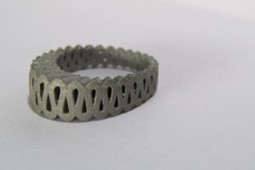
Polymer 3D printing enables designers to create lightweight geometries using lattice infill, hollow sections, or optimized wall thickness. These strategies reduce both material usage and the energy required during production and shipping. For example, medical equipment developers create lightweight ventilator housings that cut plastic consumption while improving transport efficiency.

“Lightweight parts are not just smart design—they’re smart sustainability.”

4. On-Demand Production That Prevents Overuse

Producing parts only when needed eliminates overstocking and reduces waste from unused prototypes. Polymer additive manufacturing enables tightly controlled, low-volume runs with predictable material and energy usage.

  • No Overstock Waste: Only required prototypes are printed, avoiding excess production.
  • Lower Transport Emissions: Localized printing reduces shipping needs and carbon output.
  • Controlled Material Use: The printer uses exactly the loaded material—no accidental overruns.

On-demand manufacturing ends the cycle of overproduction and excess waste.

Sustainable Development Benefits

  • Sustainable Material Usage: Additive methods create near-zero scrap, significantly cutting plastic waste.
  • Reduced Energy Use: Compact printers and optimized workflows minimize overall energy consumption.
  • Enhanced Design Flexibility: Lightweight designs reduce material and energy demand during production.

Efficient Iterations: Fast prototyping prevents repeated machining cycles that typically consume large amounts of resources.

Conclusion

Polymer 3D printing services is transforming how industries develop prototypes—enabling cleaner, faster, and more resource-efficient workflows. By slashing waste, lowering energy consumption, and supporting lightweight, sustainable designs, it aligns perfectly with modern sustainability goals.

  • Additive manufacturing drastically reduces material wastage.
  • Efficient machines and workflows lower energy usage.
  • Lightweight structures minimize material and production energy.
  • On-demand production avoids unnecessary stock and waste.

For sustainable, smart, and future-ready prototyping solutions, partnering with 3D Engineering gives you a clear advantage.

December 12, 2025
Polymer 3D printing cuts material waste and reduces energy use in prototyping while improving precision, speeding development, and supporting sustainability.

How Polymer 3D Printing is Reducing Material Waste and Energy Use in Prototyping

In today’s fast-paced world of rapid product development, reducing material waste and lowering energy consumption are no longer optional—they’re essential for sustainable growth. Polymer 3D printing services has emerged as […]
November 29, 2025
How to Choose the Right 3D Printing Method Comparing SLS, FDM, SLA, and MJF

How to Choose the Right 3D Printing Method: Comparing SLS, FDM, SLA, and MJF

The right 3D printing method can completely shape the performance, finish, and cost of your product. Each technology—SLS, FDM, SLA, and MJF—offers its own strengths, whether you’re building functional prototypes […]
November 25, 2025
How Rapid Prototyping Is Revolutionizing Industries and Shaping the Future of Innovation

How Rapid Prototyping Is Revolutionizing Industries and Shaping the Future of Innovation

The modern innovation process is lightning fast, and the force behind it is known as rapid prototyping. Rapid prototyping with 3D printing has minimized the difference between imagination and reality […]
October 31, 2025
Why SLS 3D Printing is Ideal for Functional Prototypes and Small Batch Production

Why SLS 3D Printing is Ideal for Functional Prototypes and Small Batch Production

The case with Selective Laser Sintering (SLS) 3D printing is transforming the product development game by enabling engineers and designers to develop functional prototypes and small batch production components more […]
October 31, 2025
How metal 3d printing enables complex consolidated geometries

How Metal 3D Printing Enables Complex Consolidated Geometries

The 3D printing of metals is changing the world of manufacturing, as it allows engineers to print shapes that they could not do before. It can be used to create […]
September 29, 2025
The Future of Customization Why Plastic 3D Printing is the Next Big Thing

The Future of Customization: Why Plastic 3D Printing is the Next Big Thing

https://youtu.be/1sKCCmUAO0Q?feature=shared Plastic 3D printing is rapidly becoming more than a fad; it is the foundation of the new wave of customization. Its power lies in its ability to deliver products […]
WhatsApp chat
Become Channel Partner