Where aerospace is concerned, every gram counts. The engineers are always willing to find solutions to ensure that the aircraft are made lighter, stronger, and more efficient without affecting the safety. The customary manufacturing tends to restrict the possibilities of the design, and it becomes more difficult to find a balance between strength and weight. Here, 3D printing and lattice structures come in with solutions that are intelligent to enhance performance and lessen the use of materials, especially with 3D printing for aerospace. These high-tech designs are steadily changing the way that modern aircraft and spacecraft are constructed.
“The future of aerospace isn’t solid—it’s smart, lightweight, and intelligently structured.”
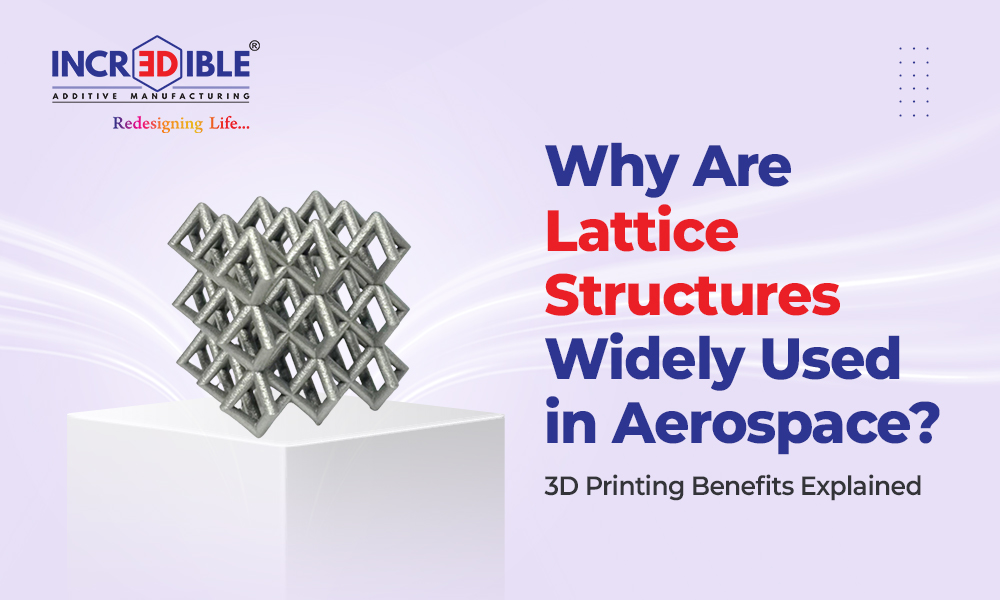
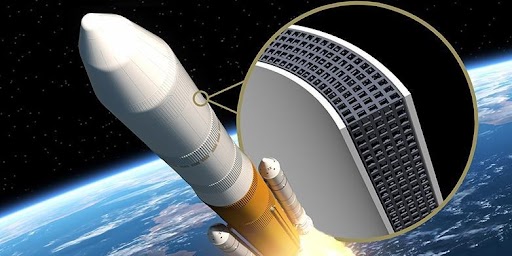
Lattice structures are built with patterns connected with each other, eliminating the waste of material but preserving the core strength. This makes them ideal in the aerospace industry, whereby the minimization of weight has a direct proportional increasing effect on fuel consumption using Lattice Structures.
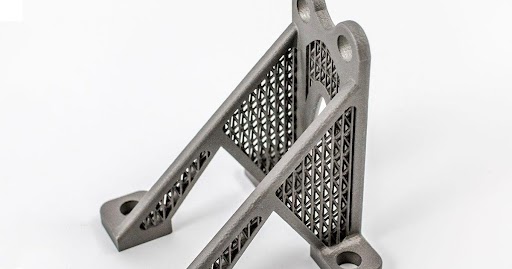
As an example, the bracket types that are now being used by companies in the interior of the aircraft are lattice-based, which allows the company to save on fuel and, at the same time, not compromise safety standards.
Lattice structures do not make material where it is not needed most, as in solid material. This is a streamlined delivery that increases performance and life span with the help of lattice structures in aerospace.
In the case of aerospace, this implies that the parts will have a higher ability to manage stress. As an example, turbine parts that are structured based on lattice cores are more competent to handle the heat and pressure, which enhances their general life span. Such an intelligent design strategy can enable engineers to stretch to the limit without adding weight and cost.
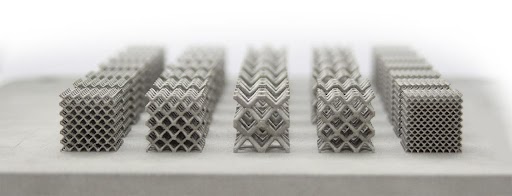
The capability of producing advanced lattice patterns, which could not be produced using traditional technologies, is one of the greatest benefits of 3D printing. This brings in new opportunities for innovation.
The following is the way this flexibility is useful in aerospace manufacturing:
As an illustration, aerospace engineers are now able to develop lightweight drone elements with complex lattice structure interiors, and shorten the development time and cost of production.
“With 3D printing, complexity is no longer a challenge—it’s an advantage.”

“Less material, less waste, and smarter production—that’s the real power of lattice design.”
This is because it helps engineers to test and introduce innovations faster by making production and prototyping faster.
Lattice structures are transforming the aerospace engineering field to incorporate lightweight, strength, and efficiency into a single solution, which is very powerful.
Here’s a quick recap of why they matter:
With the further development of aerospace technology, it has become necessary to implement the use of the latest solutions, such as lattice structures. In order to be ahead of the pack and deliver the best results, 3D Incredible should be considered to have smarter and future-ready solutions with 3D printing for aerospace.