High inventory costs are a significant challenge for manufacturers, as spare parts must be stored for extended periods, even when not in use. Warehousing, logistics, and non-utilized stock may encroach a significant amount of capital; the 3D Printed Spare Parts technology can help manufacturers resolve this, enabling companies to only produce spare parts as and when they are needed. This will minimize storage needs and help businesses manage inventory more efficiently and quickly through on-demand manufacturing.
“3D printing allows manufacturers to replace large spare-parts inventories with flexible on-demand production.”
Traditional manufacturing obliges the companies to keep a large number of spare parts in warehouses to prevent any delays during production. Using 3D printing in spare part, companies are able to produce parts only when they are needed. The 3D printing for maintenance lowers the necessity of having huge storage premises, and money is not tied up in stock that is not used.
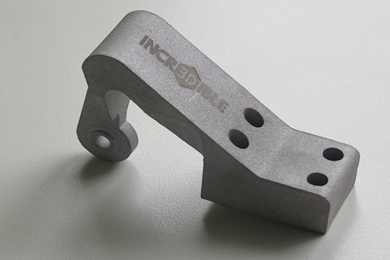
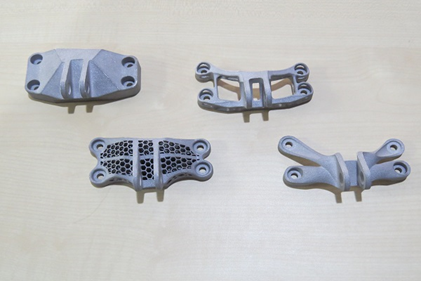
As an example, a car company can keep hundreds of replacement brackets or connectors that are not often utilized. Through 3D printing, the engineers are able to make such parts immediately so that they can reduce inventory costs manufacturing.
The manufacturers do not need to keep many spare parts in the warehouse; instead, they can save the digital design files and print them when needed through digital inventory manufacturing. This transition to online inventory instead of the physical one lowers the expenses and enhances the inventory control.
Digital inventory assists the manufacturers in several ways:
When production lines are halted by failures of machines, it is not only hard to locate spare parts, but the new technology of 3D printing services allows manufacturers to reprint and make the parts in the shortest time possible whenever the machine needs to be repaired.
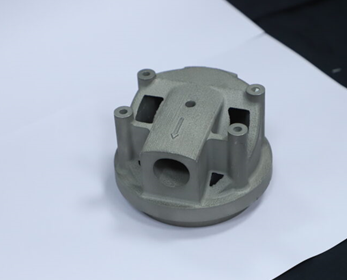
An example of this is a factory with outdated machinery that might not be able to get spare parts in the market. Through 3D printing, the engineers can reproduce the component by making a digital copy and printing it in a few hours, which will enable the company to resume business and not spend days in idle time.
“On-demand spare part production helps manufacturers keep operations running without maintaining massive inventories.”

The second benefit of 3D printed spare parts is that they can be created closer to the place of use using additive manufacturing spare parts. Companies do not have to ship their components to their suppliers but can print them locally.
Local production has several operational benefits:
“Localized 3D printing services will save on logistics expenses and enable accessibility of spare parts when they are required.”
Key Benefits
The use of 3D printing assists suppliers in moving away from high physical stocks to intelligent on-order manufacturing. This strategy will reduce storage costs, accelerate access to spare parts, and decrease dependence on the supply chain. Incorporating 3D Printed Spare Parts ensures manufacturers achieve efficient inventory management while reducing costs.
Quick Recap
Manufacturers should use 3D engineering as an optimal solution to optimize 3D printed spare parts management and regulate inventory costs.