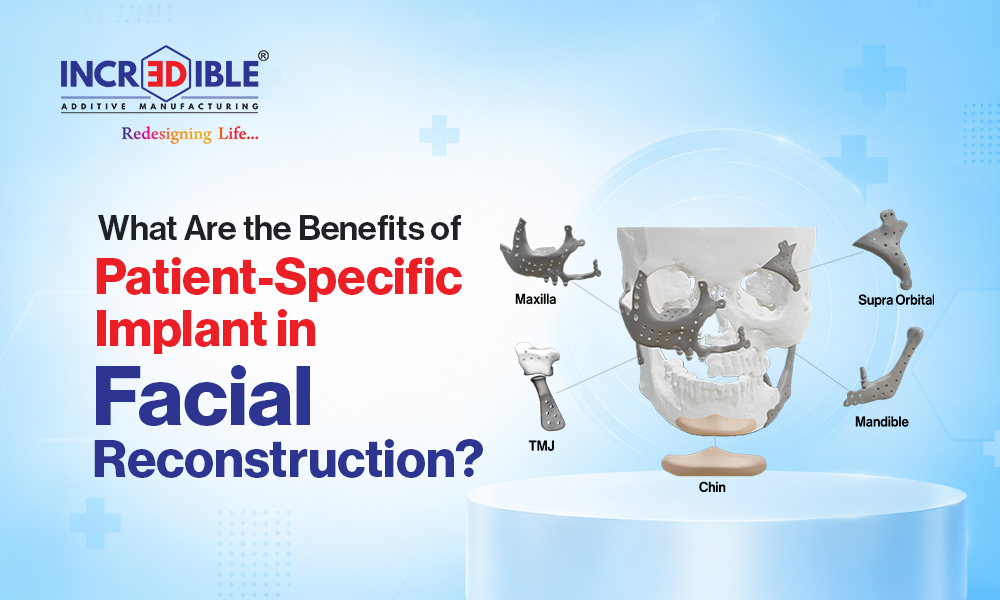
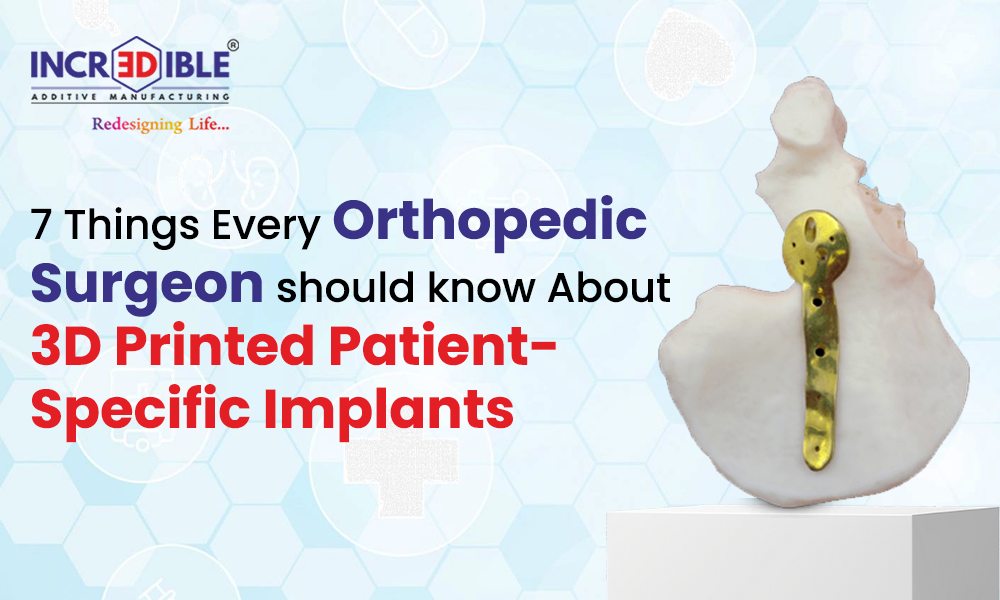
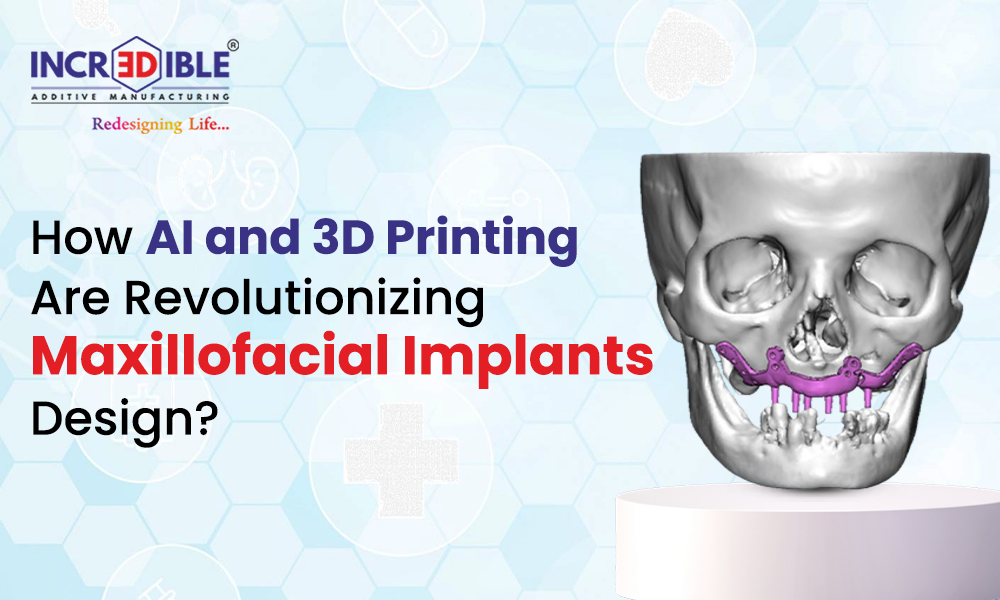
Facial reconstruction can be challenging because every patient has a different bone structure, defect, and functional need. Patient-specific implants use CT or other anatomical scan data to create an implant shaped for the affected area. With 3D planning and additive manufacturing, surgeons can prepare a more precise solution before surgery. This approach can support facial symmetry, improve implant positioning, and help restore important functions such as chewing, speaking, and eye protection.
“When the implant is designed around the patient, facial reconstruction can become more precise, predictable, and personalized.”
1. A More Precise Fit for Complex Facial Anatomy
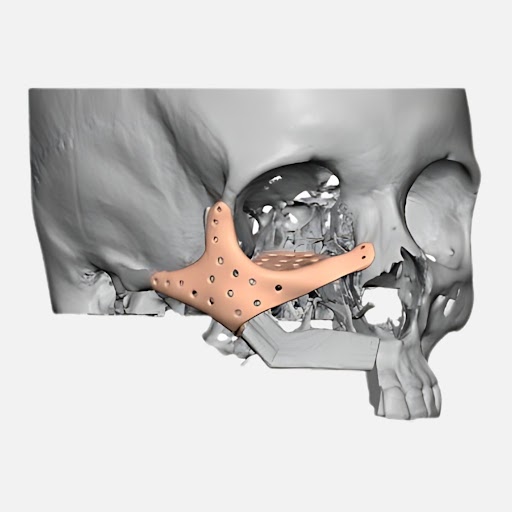
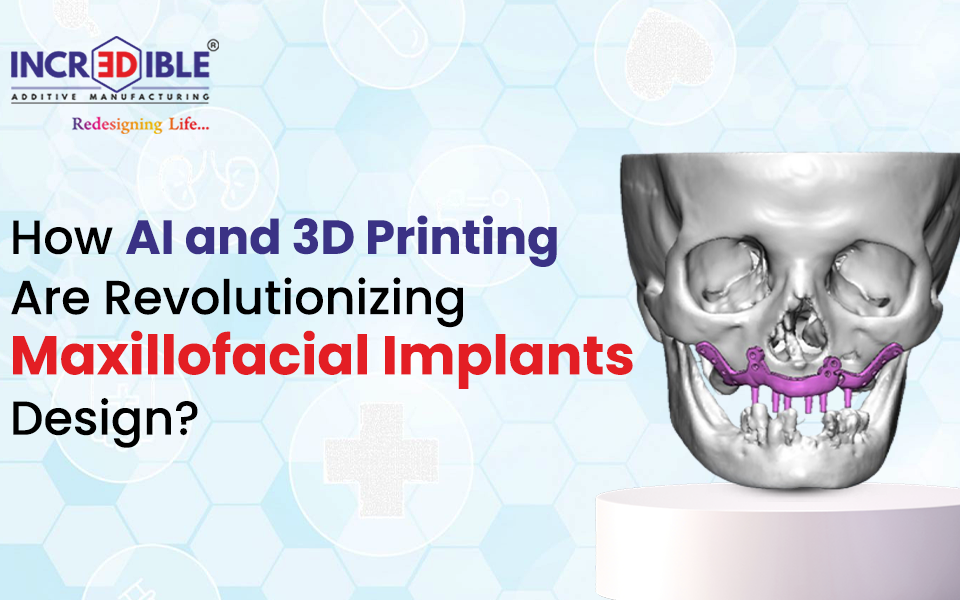
The face contains intricate structures, including the maxilla, mandible, orbit, and zygoma. Standard implants may not match unusual defects perfectly. A Facial Reconstruction implant can instead be designed from the patient’s anatomical data, allowing it to follow the required contours more closely.
For example, in an orbital reconstruction, a custom implant can be shaped around the patient’s eye socket rather than relying on a standard shape.
Better anatomical fit: The implant follows the individual bone structure and defect.
Improved symmetry: Digital planning can help surgeons recreate facial contours more accurately.
Functional support: Proper positioning can assist essential functions affected by facial bone loss.
“A precise fit is not simply about appearance; it can also support how the reconstructed facial structure works.”
2. Better Surgical Planning Before the Procedure
Digital workflows allow surgeons to study a patient’s anatomy before entering the operating room. A Patient-Specific OMF Implant can be planned alongside virtual surgical models, helping the surgical team understand where the implant needs to sit.
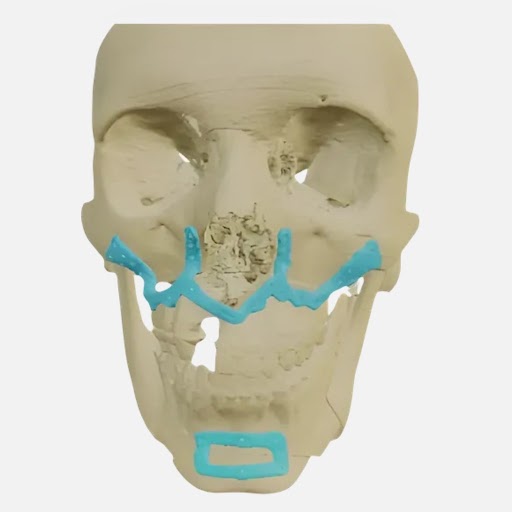
This preparation can make complex procedures more organized and predictable. For example, in mandibular reconstruction, surgeons can use digital planning to determine the desired bone shape and implant position before surgery.
Clearer planning: Patient anatomy can be reviewed digitally before treatment.
Fewer adjustments: A customized design can limit the need for extensive intraoperative reshaping.
Greater predictability: Surgeons can approach complicated reconstruction with a clearer surgical plan.
3. Supports Functional and Aesthetic Reconstruction
Facial reconstruction often has two goals: restoring function and recreating a natural facial appearance. 3D printing makes it possible to create intricate designs that would be difficult to manufacture using conventional methods.
3D printed maxillofacial implants can be developed for complex areas where accuracy matters, including the mid-face, jaw, and orbital region. Their design can be adapted to the patient’s defect while considering the surrounding anatomy.
“The best reconstruction brings function and facial form together instead of treating them as separate goals.”
Key Benefits
Personalized Design: Implants are created from patient-specific anatomical information, helping address defects that standard implant shapes may not accommodate effectively.
Accurate Placement: Detailed digital planning helps surgeons determine the intended implant position before surgery, supporting more controlled reconstruction.
Complex Geometry: Additive manufacturing can produce intricate anatomical shapes, including curved, porous, and customized structures.
Facial Symmetry: Patient-matched designs can help recreate missing contours and support a more balanced postoperative facial appearance.
Surgical Efficiency: Better preparation and implant fit may limit intraoperative modifications, potentially helping shorten procedure time in suitable cases.
Functional Restoration: Correctly positioned implants can help reconstruct structures involved in chewing, speaking, eye protection, and other essential facial functions.
Conclusion
Patient-specific implants are changing how complex facial defects can be approached. Instead of adapting a standard implant to an unusual defect, the implant itself can be designed around the patient.
Digital planning helps surgeons prepare for complex procedures.
Custom geometry makes difficult facial structures easier to address.
Functional and aesthetic goals can be considered together.
3D manufacturing enables designs that may be difficult with conventional production.
The strongest takeaway is simple: personalized facial reconstruction can give surgeons greater control while helping patients regain both facial form and essential function. For advanced, patient-focused facial reconstruction solutions, 3D Medical brings together patient-specific implant expertise and modern 3D manufacturing capabilities.