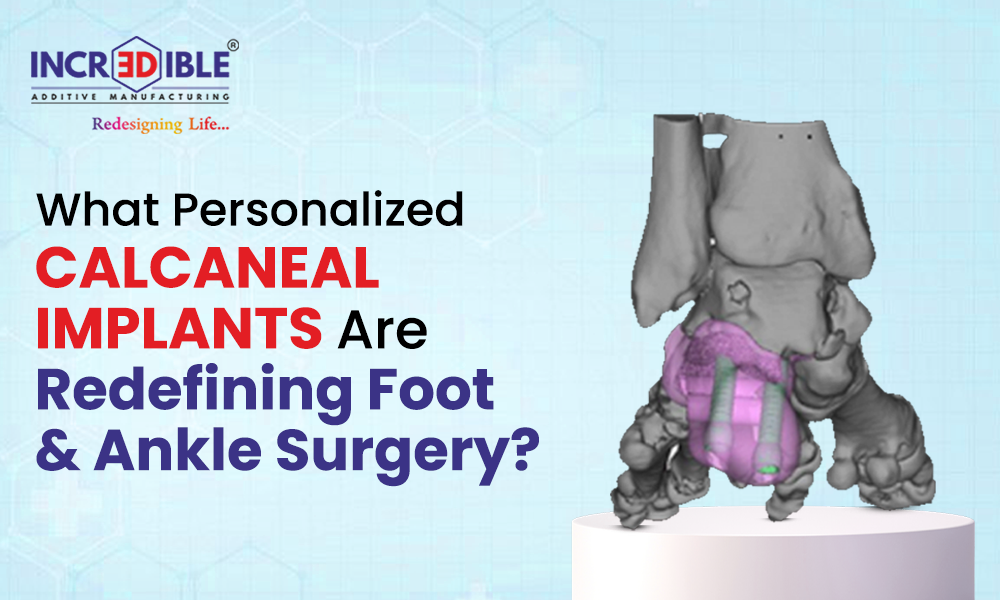
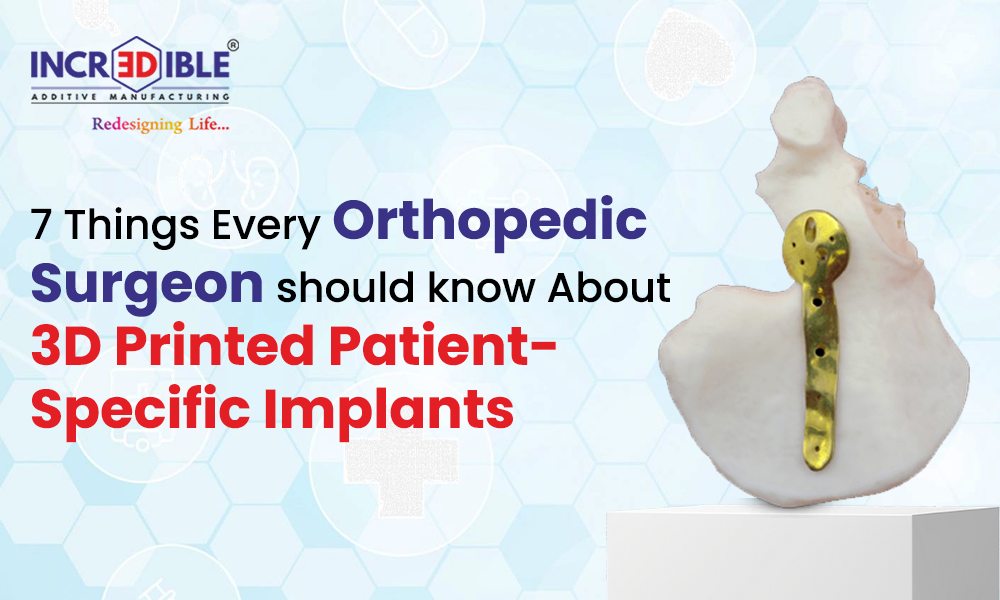
Mobility often gets hampered by any kind of foot and ankle injuries, eventually affecting the quality of life. There are traditional implants that offer possible solutions, but the anatomy of every patient is unique. It’s here that Personalized Calcaneal Implants are revolutionizing contemporary foot and ankle surgery. Surgeons can now use advanced 3D modeling and imaging technology (CT scans) to develop patient-specific solutions that enhance fit, function, and surgical outcome based on these and the advanced manufacturing of titanium implants. With the development of personalized medicine, custom-made implants for the calcaneum are turning into a revolution in complex reconstruction surgery.
“The future of foot and ankle surgery is not one-size-fits-all—it is patient-specific solutions designed around individual anatomy.”
How Are Personalized Calcaneal Implants Created?
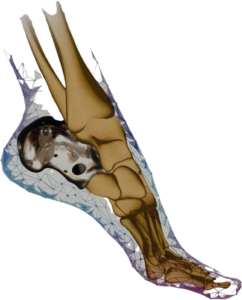
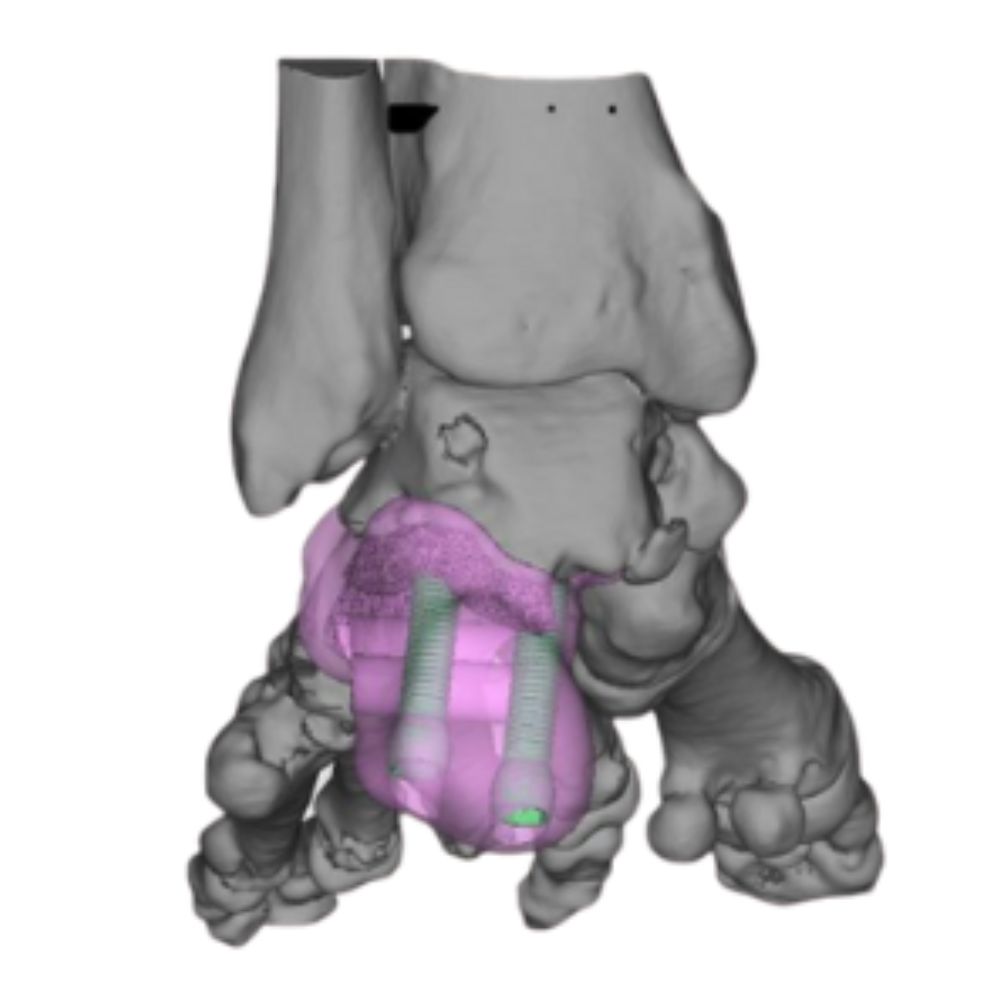
The first step in the process of creating a personalized calcaneal implant is an in-depth CT scan of the patient’s foot. Now the scan data gets converted into a digital 3D model so that the surgeon and engineers can design an implant that matches the patient’s unique bone structure.
This very individualized treatment can be used to tackle complex bone loss, deformity, and traumatic injury more effectively.
Patient-specific design
CT-based planning
Collaborative implant development
Customized surgical solutions
According to Duke University Medical Center, scientists applied 3D printed Calcaneal Implants to patients with severe bone loss and deformities, and they successfully treated the majority of people.
Better Fit Leads to Better Surgical Outcomes
Proper alignment and stability of the foot and ankle are among the biggest challenges that exist in foot and ankle reconstruction. There is the potential for anatomical variations to not be completely accommodated by standard implants, especially in reconstruction surgeries of the calcaneum.
Personalized implants are tailored to the individual patient’s anatomy, ensuring a perfect fit that enables surgeons to restore the structure and function of the joint. This personalized treatment strategy can also assist with reducing discomfort and achieving better long-term recovery results through a 3D printed implant for ankle surgery.
Custom implants can offer surgeons extra options when dealing with severe trauma and/or failed past surgeries that are not available with the standard implant systems.
Why Are Personalized Implants Beneficial for Complex Cases?
For patients with extensive bone loss or deformities or who have experienced previous implant failure, there are solutions other than conventional implants available. Flexibility with personalized calcaneal implants for challenging surgical situations.
The implants can be customized with different shapes and fixation characteristics based on the clinical needs.
Treatment of bone loss
Support for deformities
Improved reconstruction options
Enhanced surgical planning
Greater procedural flexibility
Some patients, for instance, who were previously considered for amputation have been successfully treated by custom titanium implant options that have enabled the patient to maintain foot function and mobility through 3D printed implants.
“When conventional implants cannot match complex anatomy, personalized implants create new possibilities for limb preservation and recovery.”
How Is Technology Shaping the Future of Foot and Ankle Reconstruction?
The development of personalized implants is still advancing with the development of 3D printing techniques, medical imaging, and surgical planning software. The surgeon is now able to see what is going to happen during surgery and to create an implant to solve very specific cases.
With the advancement of technology, customization of calcaneum implants will be even more significant in reconstructive surgery, which will help to enhance the patient’s results and facilitate more predictable and efficient surgery.
“Combining imaging, digital planning, and custom implants is redefining what is possible in foot and ankle reconstruction.”
Key Benefits
Precise Anatomical Fit
A personalized calcaneal implant created with patient-specific imaging information delivers a better fit with natural anatomy and greater surgical accuracy.
Improved Functional Outcomes
Patients may have better postoperative function, mobility, and foot mechanics with better implant alignment.
Enhanced Surgical Planning
Digital modeling helps surgeons assess procedures before surgery, thus enhancing decision-making and surgical procedural confidence.
Support for Complex Cases
Patients with substantial bone loss, deformities, or revision surgery may be able to receive customized solutions that are not offered with traditional implants.
Conclusion
The combination of state-of-the-art imaging, 3D design, and patient-specific methods in reconstruction has redefined foot and ankle surgery with Personalized Calcaneal Implants. Rather than using standard implant sizes, surgeons can now develop solutions that fit their individual patients’ anatomy, aiding in better fit, function, and clinical outcomes.
Key Takeaways
Accurate surgical planning is ensured with the help of advanced CT imaging.
Personalized implants to solve the most challenging reconstruction issues.
Better alignment can help with better outcomes in function.
Using 3D technology, the future of personalized foot surgery is becoming more and more a reality.
With the healthcare sector moving towards individualized treatment strategies, customized calcaneal implants are demonstrating the value of technology in enhancing surgical accuracy and patient outcomes. As the technology of implant customization continues to develop, collaborating with 3D Medical can enable healthcare professionals to utilize trusted patient-specific solutions for challenging foot and ankle reconstruction.