The implants used in cranial reconstruction must offer exceptional mechanical strength, biocompatibility, and long-term stability. Whether the implant is required after trauma, tumor removal, or congenital correction, the chosen material significantly impacts the implant’s longevity as well as the patient’s comfort and safety. Advances in medical-grade materials and patient-specific 3D printed cranial implants are far more precise and reliable than ever before.

The brain — and the patient’s future — stay safer with the right implant material.

1. PEEK: A Lightweight, Strong, and Highly Biocompatible Option

PEEK: A Lightweight, Strong, and Highly Biocompatible Option

Polyether Ether Ketone (PEEK) is a leading choice for cranial implants materials because its mechanical behavior closely mimics natural bone. It is lightweight yet strong, offering excellent comfort and long-term durability. 

In trauma-related cranial defects, surgeons often prefer PEEK because it can be custom-milled or 3D printed to match the defect perfectly, ensuring symmetry and aesthetics.

2. Titanium: The Toughest Material with a Proven Safety Record

Titanium (Ti6Al4V ELI) remains one of the most trusted patient specific cranial implant materials due to its unmatched strength and decades-long history of medical success. It is extremely durable and offers a low risk of complications.

  • Excellent Durability: Titanium resists wear, deformation, and corrosion over long periods.
  • Superior Biocompatibility: Its surface naturally encourages bone attachment, improving stability.

Ti6Al4V ELI stands for Titanium–6% Aluminum–4% Vanadium, Extra-Low Interstitial grade. It is a highly advanced medical-grade titanium alloy widely used in cranial implants, orthopedic implants, surgical instruments, and aerospace components.

The “ELI” designation means the alloy contains very low levels of impurities (like oxygen, nitrogen, and carbon). This increases:

  • Fracture toughness
  • Fatigue resistance
  • Biocompatibility

This makes it safer for long-term use inside the human body.

3. PMMA (Polymethylmethacrylate) for Safe, Stable Aesthetic Reconstruction

PMMA is a widely used 3D printed cranial implant material because it closely mimics bone density on imaging scans while maintaining strong biocompatibility. It is commonly selected for cranioplasty procedures performed after trauma or surgery, as it can be easily shaped and customized to match the patient’s skull contour with high aesthetic accuracy.

PMMA implants are known for their stability and long-term reliability, although regular monitoring is recommended to ensure there are no risks of infection or displacement

“When bone grows into the implant, it becomes a natural, stable part of the patient”.

Conclusion

The best cranial implant materials are those that provide strength, biocompatibility, and durability while ensuring long-term patient comfort. Whether using titanium for its reliability, PEEK for its bone-like behavior, or porous polymers for superior integration, selecting the right material is essential for safe and effective cranial reconstruction.

  • Strong materials such as titanium and PEEK offer lasting protection.
  • Biocompatible options make long-term implantation safer.
  • Custom-fit designs improve comfort and functionality.
  • Long-term stability reduces the need for revision surgeries.

For precise and patient-specific cranial implant solutions, 3D Medical delivers outcomes you can trust.

December 17, 2025
What Are the Best Materials for Cranial Implants That Ensure Strength, Safety, and Longevity

What Are the Best Materials for Cranial Implants That Ensure Strength, Safety, and Longevity?

https://youtube.com/shorts/01dl7G2VUa8?si=IXM8ZdbaY-6rOuPF The implants used in cranial reconstruction must offer exceptional mechanical strength, biocompatibility, and long-term stability. Whether the implant is required after trauma, tumor removal, or congenital correction, the chosen […]
December 12, 2025
Polymer 3D printing cuts material waste and reduces energy use in prototyping while improving precision, speeding development, and supporting sustainability.

How Polymer 3D Printing is Reducing Material Waste and Energy Use in Prototyping

In today’s fast-paced world of rapid product development, reducing material waste and lowering energy consumption are no longer optional—they’re essential for sustainable growth. Polymer 3D printing services has emerged as […]
November 29, 2025
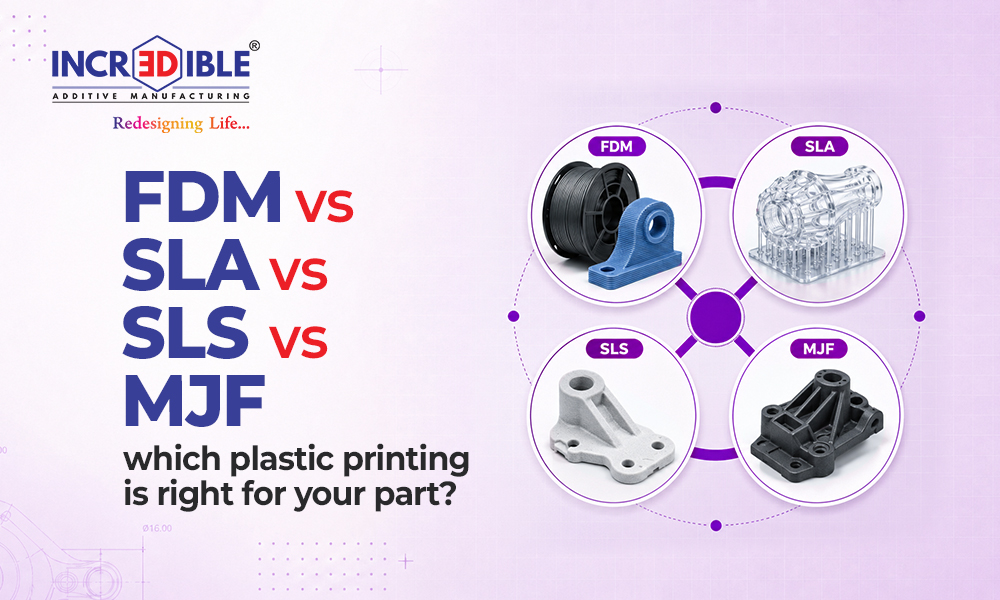
How to Choose the Right 3D Printing Method Comparing SLS, FDM, SLA, and MJF

How to Choose the Right 3D Printing Method: Comparing SLS, FDM, SLA, and MJF

The right 3D printing method can completely shape the performance, finish, and cost of your product. Each technology—SLS, FDM, SLA, and MJF—offers its own strengths, whether you’re building functional prototypes […]
November 25, 2025
How Rapid Prototyping Is Revolutionizing Industries and Shaping the Future of Innovation

How Rapid Prototyping Is Revolutionizing Industries and Shaping the Future of Innovation

The modern innovation process is lightning fast, and the force behind it is known as rapid prototyping. Rapid prototyping with 3D printing has minimized the difference between imagination and reality […]
November 18, 2025
How 3D Printed Anatomical Models Are Transforming the Future of Surgical Planning

How 3D Printed Anatomical Models Are Transforming the Future of Surgical Planning

Surgeons in modern medicine are changing the way they plan and execute complex surgeries in the world of 3D-printed anatomical models. They are models that copy the human organs, bones, […]
November 14, 2025
How Customized Orthopedic Implants Are Designed Around Patient Needs

How Customized Orthopedic Implants Are Designed Around Patient Needs

https://youtu.be/S4cSiYQXCdk?si=0yRqgA9FGnZVkpHR Each patient is a singular entity—then how come their implants are identical to everyone else’s? Individual orthopedic implants are changing the manner in which bone and joint surgeries are […]
Contact Us
WhatsApp chat
Become Channel Partner