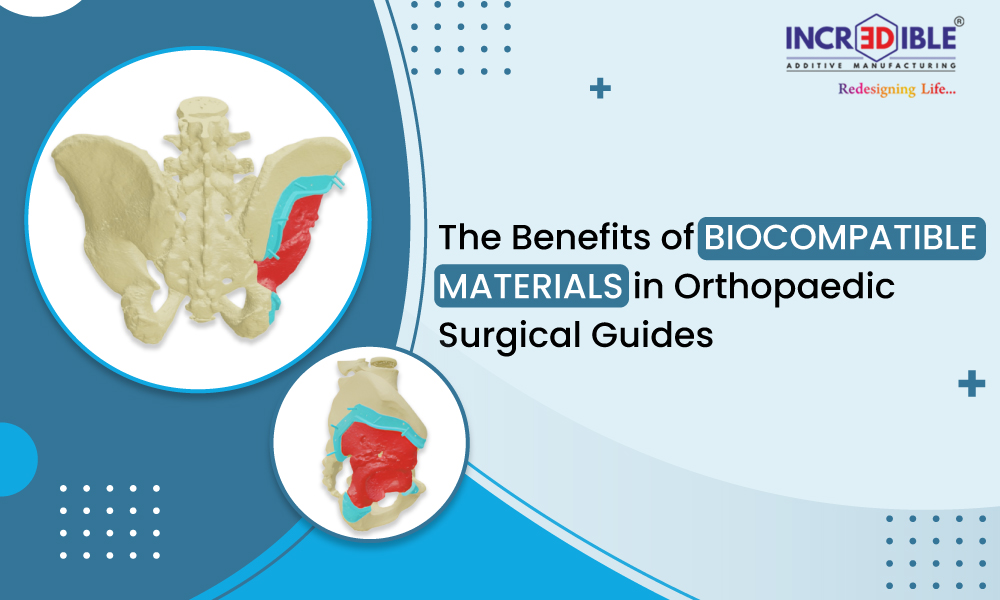
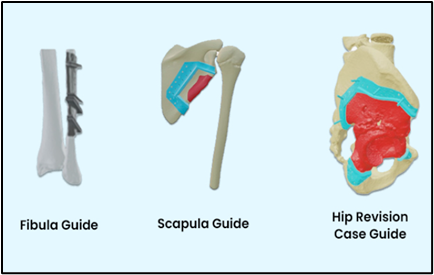
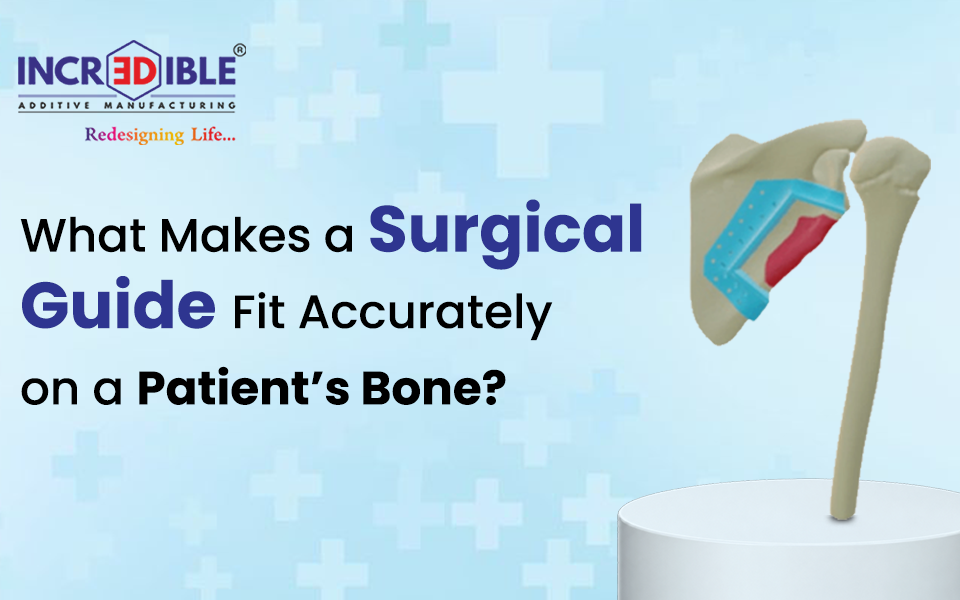
Orthopaedic surgeries require accuracy, security, and patient-focused solutions. The use of biocompatible materials in 3D-printed surgical guides is changing the way surgery planners and surgical practitioners’ approach complex bone procedures. They are constructed so that they can safely interact with human tissue while ensuring the mechanical strength required in an operating room. They create a new age of personalized orthopedic care by improving fit, stability, and workflow efficiency to achieve better results and streamline the surgical workflow.
“Biocompatibility is not an option in surgery—it is the basis of safety”.
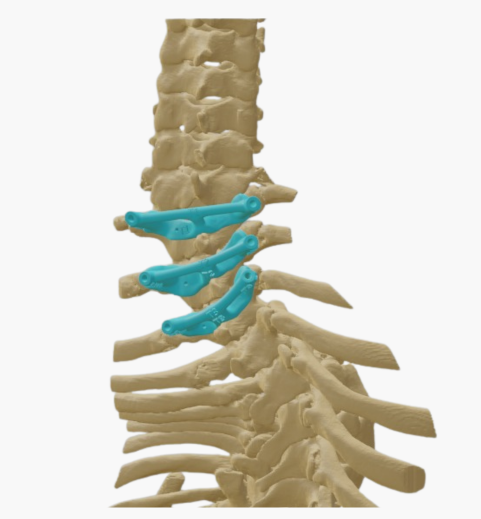
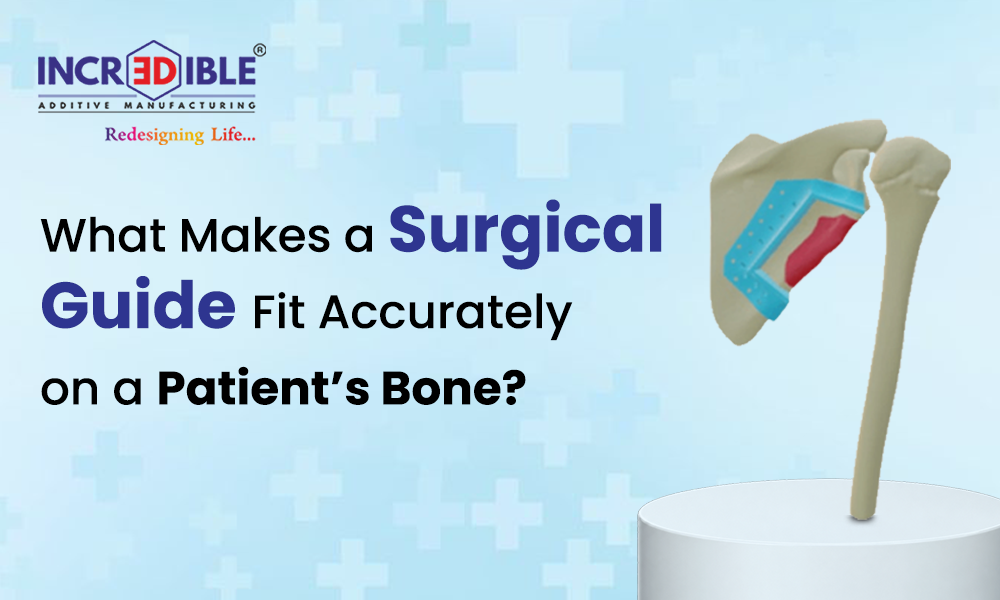
Biocompatible materials allow surgical guides to contact bone and soft tissue without causing harm or complications. They do not trigger reactions, enabling surgeons to place guides with confidence. Patient-specific guides are widely used in ACL reconstruction to position drill holes accurately and in spine fusions, where guides keep screw drills straight during complex alignment procedures.
2. Less Surgical Time and Hassle-Free Workflow.
The use of Orthopaedic Surgical Guides Materials allows surgeons to rely on guides that do not deform, lose stability, or obstruct visibility during surgery. This reduces workflow interruptions and accelerates the overall procedure.
Less Repositioning: When seated on bone, guides remain stable, minimizing surgical delays.
Visible Markings and Fit: Good surface quality helps surgeons work with accuracy and speed.
Streamlined Processes: The predictable behavior of biocompatible polymers ensures organized workflows.
3. Sterilization Compatibility and Durability
Biocompatible materials are designed to withstand autoclaving, chemical cleaning, and handling without warping or deteriorating. This reliability ensures safety from planning to incision. In total knee replacement, for example, medical-grade polymer guides maintain their shape through repeated sterilization cycles, giving surgeons dependable tools every time.
“A manual is only as good as the material it is made from”.
4. Improved Surgeon Confidence and Patient Outcomes
Strong, biocompatible materials offer predictable performance that allows surgeons to operate with complete confidence during high-stakes procedures. This reliability directly contributes to safer and more successful orthopedic outcomes.
Constant Precision: Materials prevent micro-movement during cutting or drilling.
Increased Certainty: Surgeons can trust the structural integrity of the guides.
“Trust in instruments leads to trust in results.”
Key Benefits
Safe Tissue Interaction: Biocompatible materials lower the risk of irritation or inflammation during surgery, allowing guides to function safely in direct contact with bone and soft tissue.
Consistent and Predictable Fit: Strong polymers maintain their shape, improving drilling accuracy and bone preparation during orthopedic procedures.
Accelerated Operating Time: Their reliability reduces repositioning and uncertainty during surgery, helping shorten overall operation time.
Sterilization Ready: These materials withstand repeated sterilization cycles without warping or losing mechanical strength.
Conclusion
Orthopaedic surgical guides have never been as safe, precise, and stable as they are with biocompatible materials, giving surgeons the ability to work confidently even in complex conditions. Their durability and tissue-friendly nature make them essential for modern, personalized surgery.
Patient-friendly materials are nonreactive and enhance safety.
Accuracy improves when guides stay stable and correctly positioned.
Surgical time is reduced through consistent performance.
Enhanced outcomes come from a better fit and reliability.
When seeking trusted and high-performance surgical guide solutions, 3D Medical is the ideal choice.