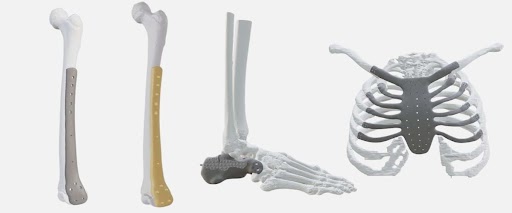
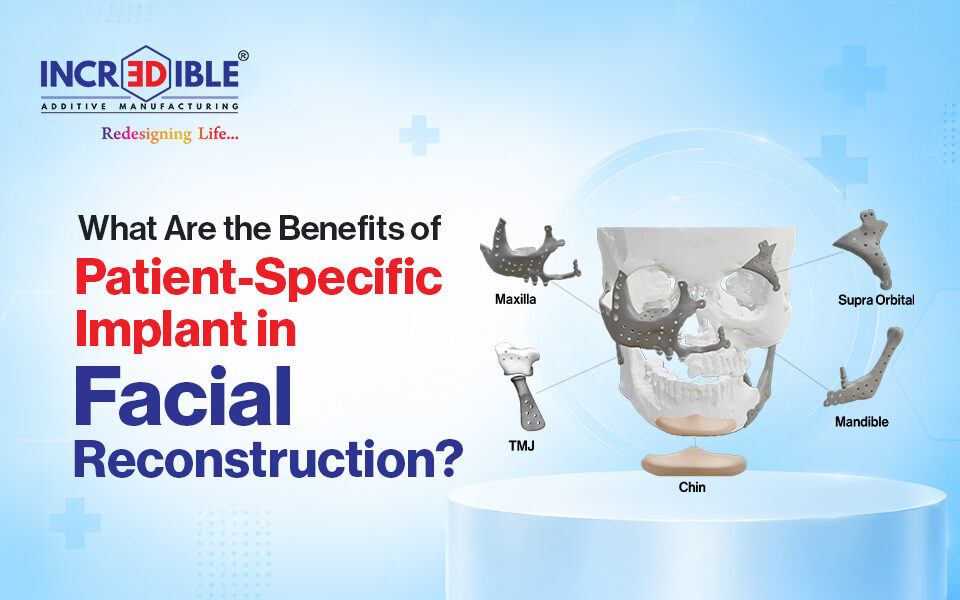
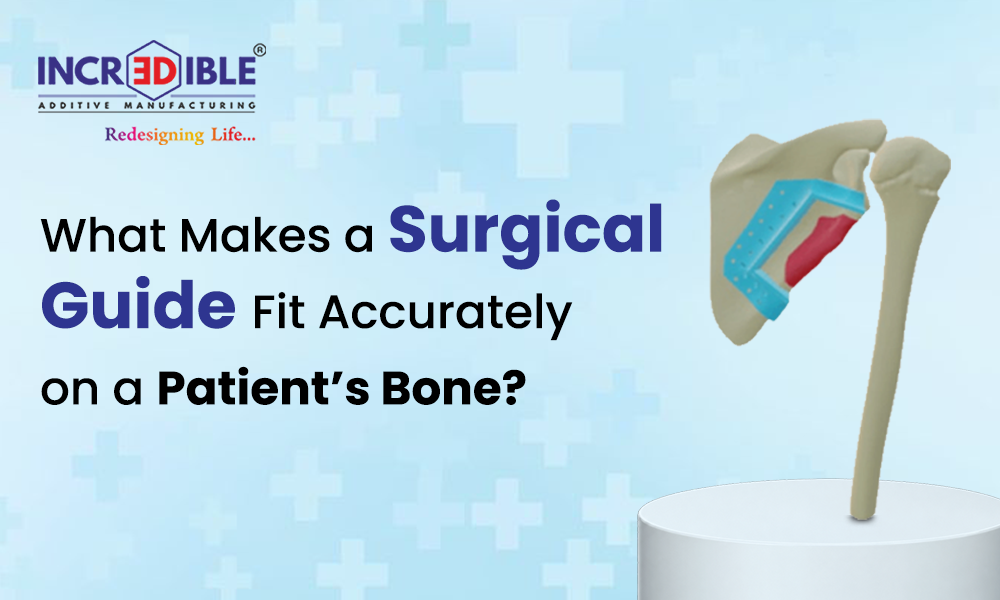
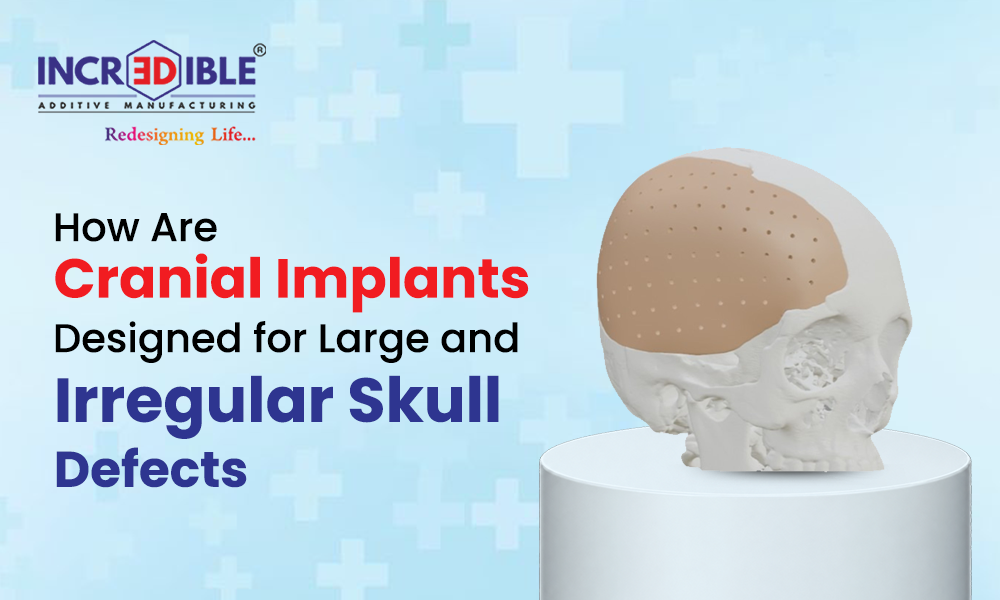
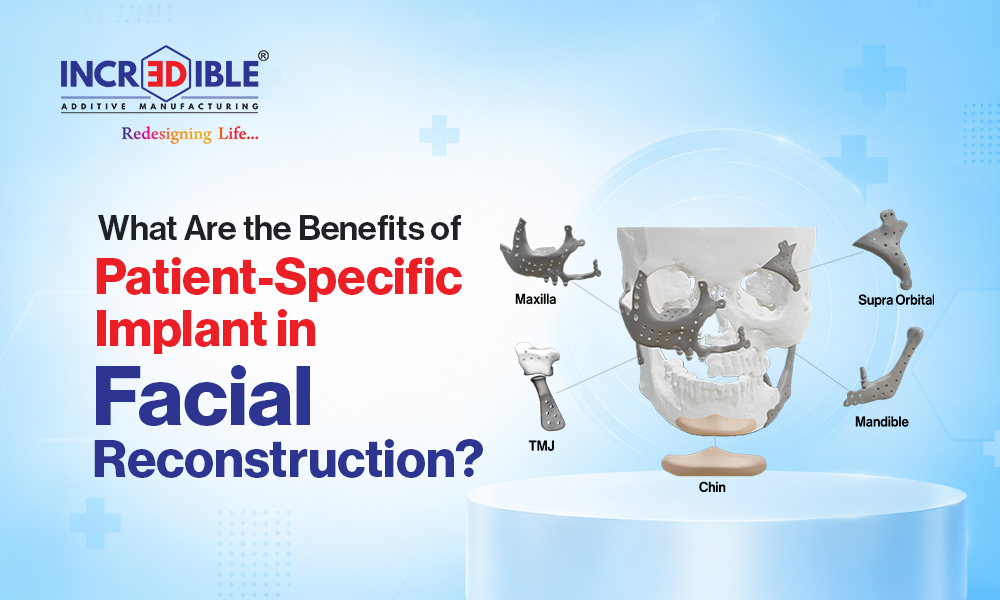
Each patient is a singular entity—then how come their implants are identical to everyone else’s? Individual orthopedic implants are changing the manner in which bone and joint surgeries are being carried out. These implants are made to fit the anatomy of every patient to fit in, bring comfort, and result in quicker healing and better results in the long run. Orthopedic care is more personalized than ever with the development of more sophisticated customised orthopedic implants and medical printing.
“Personalized implants don’t just heal—they help patients move better, live stronger, and recover faster.”
Learning the Concept of Patient-Specific Design
The first step in 3D printed medical implants is accurate imaging of the anatomy of the patient. Engineers have a 3D model, which is a blueprint of the implant designed using CT or MRI scans. This guarantees flawless alignment, precise fitting, and greater functionality after implantation.
Example: In the case of a complicated knee replacement, a 3D model of the patient will enable the surgeon to strategize all the necessary procedures prior to going to the operating room, minimizing the dangers and enhancing the surgical performance.
Advantage: Every implant is an echo of the body structure of the patient, and this way, the recovery will be easier and the unpleasant sensations will be reduced.
3D Printing in Orthopedic Innovation
3D printing enables medical engineers to create customized patient specific implants with complex geometries, which are impossible to manufacture using conventional methods.
Better accuracy: The procedure is more accurate, has a controlled porosity to allow bone growth, and is material-efficient.
Goal: A porous titanium structure of a 3D-printed spinal implant allows natural bone growth, providing long-term stability and strength.
Effects: Accurate preoperative design and simulation help surgeons to conduct significantly more predictable and less invasive surgeries.
Cooperative Engineering Doctors and Designers
Cooperation is one of the most outstanding elements of the design of customised orthopedic implants. The collaboration between orthopedic surgeons and biomedical engineers is done to reduce medical scans into functional designs.
“When medical insight meets engineering precision, patient outcomes reach new heights.”
The collaboration guarantees that all curves, shapes, and fits are calculated to be comfortable, mobile, and durable, and lowers the number of post-surgery complications.
Precision fit testing and validity
Any implant passed in front of the operating table has gone through stringent validation and simulation tests. Modern modeling systems are based on simulating real-life stresses, strains, and motions so that the implant would act perfectly in the body.
The ideal fit is not guessed but is tried, screened, and tested before ever coming into contact with the patient.
“The perfect fit isn’t guessed—it’s tested, refined, and proven before it ever touches the patient.”
Key Benefits of Customized Orthopedic Implants
Precision Fit: Custom-made design eliminates all errors in alignment and natural movement.
Better Comfort: An ideal fit with the body gets rid of unnecessary stress.
Conclusion
Personalized implants for the orthopedic industry will be the next generation of medical care, being personalized with perfect engineering and human anatomy. From imaging up to testing, all processes are developed based on the comfort, recovery, and mobility of the patient.
In summary:
There is accuracy through imaging and modeling
3D printing offers design control and flexibility
Teamwork promotes creativity
To achieve the highest level of patient-centered 3D printed medical implants, refer to 3D Medical, where each design is based on your needs and is finished with your comfort in mind.