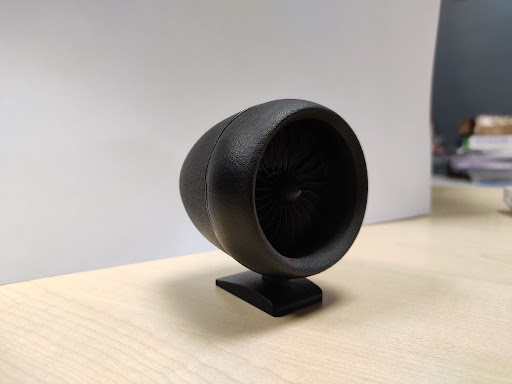
When a business needs 20, 50, or a few hundred functional parts, traditional manufacturing can become expensive because tooling and setup costs are difficult to justify. MJF 3D printing offers a practical alternative by producing multiple parts within a single build while maintaining consistent quality. It uses powdered polymer material and fusing agents to form complete layers quickly. This combination of speed, repeatability, design freedom, and tooling-free production makes MJF particularly useful for small-batch manufacturing.
“MJF makes small production runs more practical by combining speed, consistency, and freedom from expensive tooling.”
How Does MJF Make Small-Batch Production Faster?
Multi Jet Fusion uses an array of printheads to selectively deposit fusing and detailing agents across a powder bed. An energy source then fuses the treated areas, and fresh powder is spread for the next layer. Unlike processes that trace individual outlines repeatedly, MJF can process large areas efficiently.
This approach makes it useful when businesses need several functional components without waiting for conventional tooling.
Real-world examples include:
Automotive brackets: Multiple variations can be produced for testing without creating separate molds for every design.
Consumer product housings: Engineers can produce short runs of enclosures to test assembly, ergonomics, and functionality.
Why Is MJF Cost-Effective for Small Production Runs?
Small batches often create a manufacturing dilemma. Injection molding can deliver large quantities efficiently, but creating molds may not make financial sense for limited demand. Plastic 3D printing services removes the need for dedicated tooling, allowing production to begin directly from a digital design.
Businesses can therefore manufacture only the quantity required instead of committing to large inventories.
No dedicated tooling: Parts can move from a digital design to production without investing in expensive molds or dies.
Efficient batch production: Multiple components can be arranged within one build, improving machine utilization and production efficiency.
Lower inventory pressure: Businesses can produce parts according to demand instead of storing large quantities beforehand.
“For limited quantities, avoiding tooling costs can make the difference between an impractical project and a viable production run.”
What Makes MJF Suitable for Functional Parts?
Small-batch production is valuable only when the resulting components can perform their intended functions. MJF commonly works with PA12, producing parts known for their strength, dimensional accuracy, and functional performance. The process can also create complex geometries, internal channels, and detailed structures that would require additional manufacturing steps through conventional methods.
For example, aerospace teams can use Multi Jet Fusion 3D printing for specialized brackets and ducting prototypes, while medical companies can develop customized device components in limited quantities.
“MJF bridges the gap between prototyping and production by making functional parts without the cost of traditional tooling.”
Key Benefits
Fast Production: MJF processes complete areas efficiently, allowing businesses to manufacture small batches faster than many conventional production approaches.
Tooling-Free Manufacturing: Eliminating molds and dedicated tooling makes limited production quantities more financially practical for specialized applications.
Functional Materials: PA12 provides strong and durable components suitable for functional prototypes, replacement parts, housings, and other demanding applications.
Design Freedom: Complex geometries, internal channels, and detailed structures can be produced directly from digital models without conventional manufacturing restrictions.
Batch Efficiency: Multiple components can be arranged within a single build, helping improve production efficiency and machine utilization.
Conclusion
Small-batch manufacturing requires a balance between cost, speed, quality, and flexibility. MJF delivers this balance by removing tooling requirements while producing strong, detailed, and functional components directly from digital designs.
Faster production for limited quantities.
Lower setup costs without dedicated molds.
Functional components suitable for real-world applications.
Complex geometries without conventional tooling restrictions.
Efficient batch production from a single build.
For businesses looking for MJF 3D printing for production, 3D Incredible offers a practical route to creating functional small-batch components with speed, precision, and production flexibility.