The aerospace industry has always been a place of innovation, but startups need to be innovative as much as they need breakthrough ideas—and speed. In traditional manufacturing, a lot of time is taken up in making the tools and producing the product several times over to get it right before testing. That’s the story that’s changing today with metal 3D printing in India. Start-ups can get a concept to flight testing much faster, with the ability to rapidly prototype, make complex parts, and perform design iterations.
“Metal 3D printing is helping aerospace startups spend less time waiting and more time innovating.”
Faster Prototyping Helps Ideas Take Flight
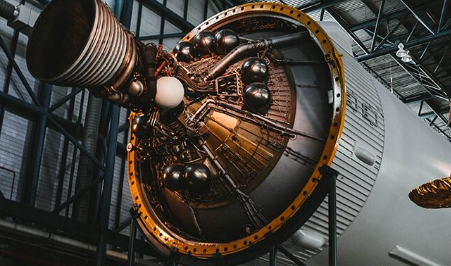
All aerospace products have several prototypes that have to be developed to be successful. Startups can create components within weeks using traditional manufacturing processes, which is a much longer timeframe with metal 3D printing. This short development cycle helps engineers explore, test concepts, and enhance performance before mass production. For example, rocket developers like Masten Space Systems have increased the use of additive manufacturing to rapidly prototype rocket engine components for design improvements, without the high cost of repeated machining.
Complex Metal Parts Become Easier to Manufacture
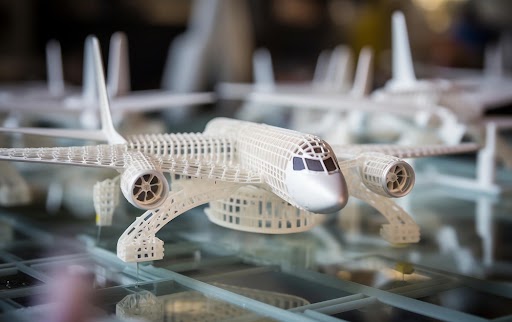
Modern aerospace components often feature internal channels, lattice structures, and intricate geometries that are difficult or expensive to machine traditionally. Metal additive manufacturing gives startups the freedom to build these advanced designs while simplifying production. This flexibility helps engineers achieve the following:
Greater design freedom for highly complex aerospace components.
Rapid design iterations without creating new tooling.
Lower development costs during product testing and validation.
Shorter Development Cycles Create a Competitive Edge
For aerospace startups, reaching investors, customers, or certification milestones quickly can make all the difference. Metal 3D printing shortens manufacturing timelines, allowing engineering teams to build, evaluate, and improve components much faster than traditional production methods.
Example: Engineers at Gravity Industries rapidly tested multiple rocket igniter designs using additive manufacturing before finalizing an optimized configuration, saving both development time and engineering costs. “Innovation accelerates when engineers can test ideas tomorrow instead of waiting weeks.”
Metal 3D Printing Supports Real-World Aerospace Applications
The technology has moved far beyond prototyping. Today, metal 3D-printed components are being used in rocket engines, aircraft tooling, satellite structures, and research projects where performance and precision are critical. This growing adoption enables:
Production-ready aerospace components with complex geometries.
Custom tooling for aircraft manufacturing and maintenance.
Research applications for wind tunnel testing and space missions.
“Metal 3D printing is no longer just a development tool—it’s becoming a production advantage.”
Key Benefits
Fast product development: Startups use 3D printing with metals to prototype, test, and refine aerospace components to get innovative ideas to validation and commercialization earlier, highlighting metal 3D printing benefits.
More design flexibility: Engineers can create extremely complex shapes that are challenging or impossible by traditional machining, increasing design options.
Reduce time to design change and avoid any unnecessary tooling: Startups can save time and resources in product development by avoiding costly tooling and making rapid changes.
Enables high-tech aerospace uses: Metal AM is used in aerospace for rocket engines, aircraft tooling, satellite parts, and more for demanding applications.
Conclusion
Companies that are able to be innovative and yet engineer with precision will have the future in aerospace. In 3D printing, metal allows startups to get prototypes done quicker, create more complex parts, and test out new concepts without having to wait for the production process. As aerospace technology advances, the use of additive manufacturing as a key enabler to speed up innovation, design flexibility, and getting to the skies faster is becoming increasingly important with metal 3d printing for aerospace.
Key Takeaways
Rapid prototyping accelerates the development process of a product.
Production of complex metal parts is made simpler.
The smaller the development cycles, the quicker startups can innovate.
The use of real-world aerospace applications continues to grow.
3D printing with metal is revolutionizing the design and manufacturing of new aircraft products.
If you want to speed up the development of innovative products for the aerospace industry with precision metal 3D printing solutions, you can rely on a highly qualified metal 3D printing services provider like 3D Incredible that can offer you highly advanced, reliable, and application-specific solutions.