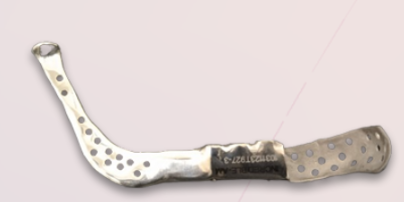
Mandible implants are a crucial part of the restoration of the jaw following trauma, tumour removal, congenital cases, or extensive bone loss. Surgeons must have a substance and material that can be placed in the body that will not be damaged by the pressure from chewing and talking. That is the reason why today the Ti6Al4V ELI grade 23 titanium is considered a good choice for modern mandibular reconstruction. It has excellent biocompatibility, strength, corrosion resistance, and reliability, suitable for both the standard and the 3D printed mandible implants patient-specific 3D-designed implants for advanced maxillofacial procedures.
“Grade 23 titanium combines strength, safety, and tissue compatibility, making it one of the most trusted materials for modern mandible implants.”
Better Compatibility with Bone and Tissue
The human jaw is subjected to constant movements and pressure. The materials used for implants should not provoke any unwanted reaction with the surrounding tissue. The addition of less oxygen, nitrogen, carbon, and iron makes Ti6Al4V ELI Grade 23 titanium more biocompatible than Grade 5 titanium.
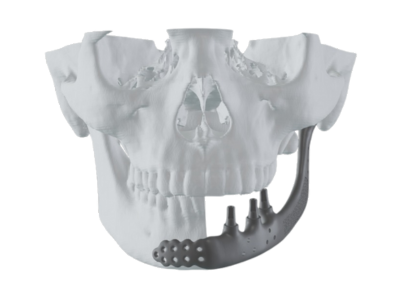
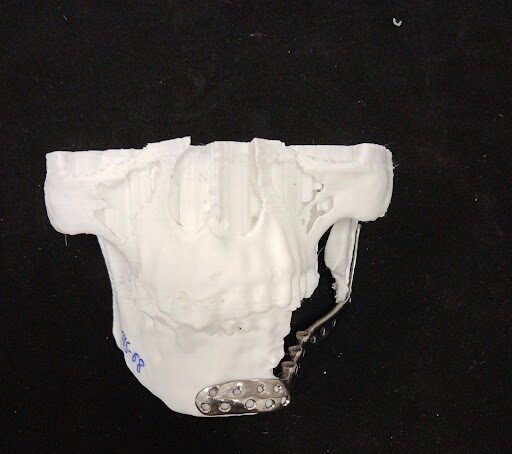
The use of custom mandibular implants designed using 3D design and additive manufacturing, for instance, can allow for implants that closely match a patient specific mandible implant patient’s anatomy and promote stable implant-bone integration. This allows surgeons to have more predictable long-term results.
Why Surgeons Prefer Grade 23 Titanium
Before choosing the material to be used for mandible reconstruction, surgeons assess how the material will perform in real-life scenarios. Grade 23 titanium has many benefits:
The implant has great fracture toughness, which enables it to resist chewing forces and everyday movement in the jaw.
The implant’s ability to withstand corrosion over long periods of time protects it from body fluids.
Better ductility for performance in complex implant geometries.
It is used in many implant-grade medical applications, with support from ASTM F136 certification.
The properties make it a reliable option for challenging maxillofacial surgeries.
The mandible is designed as a 3D model and supports advanced 3D-designed mandible reconstruction.
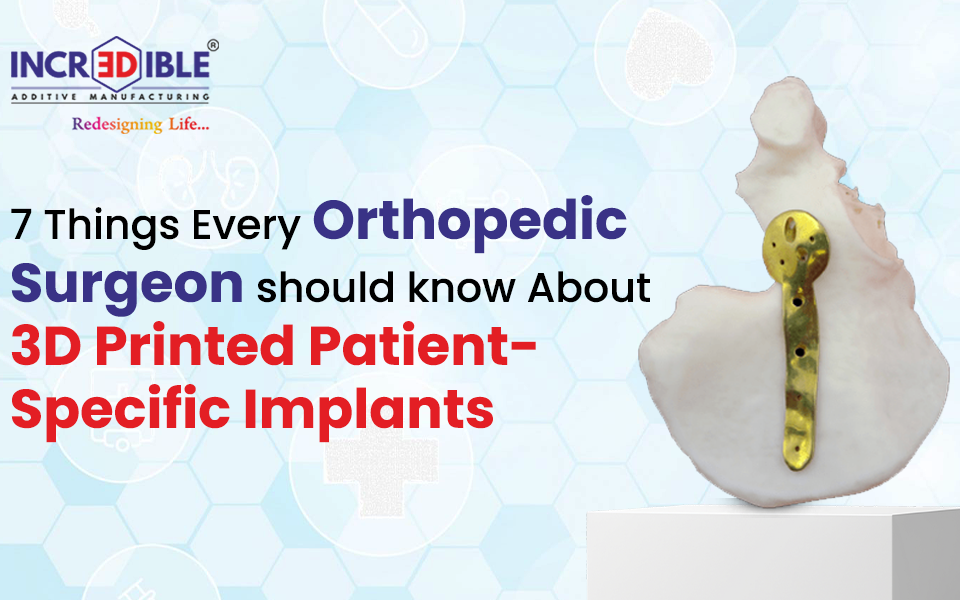
In today’s healthcare industry, 3D-created patient-specific implants are utilised more and more to enhance the precision of surgery. Grade 23 titanium is a superb material for high-tech manufacturing technologies.
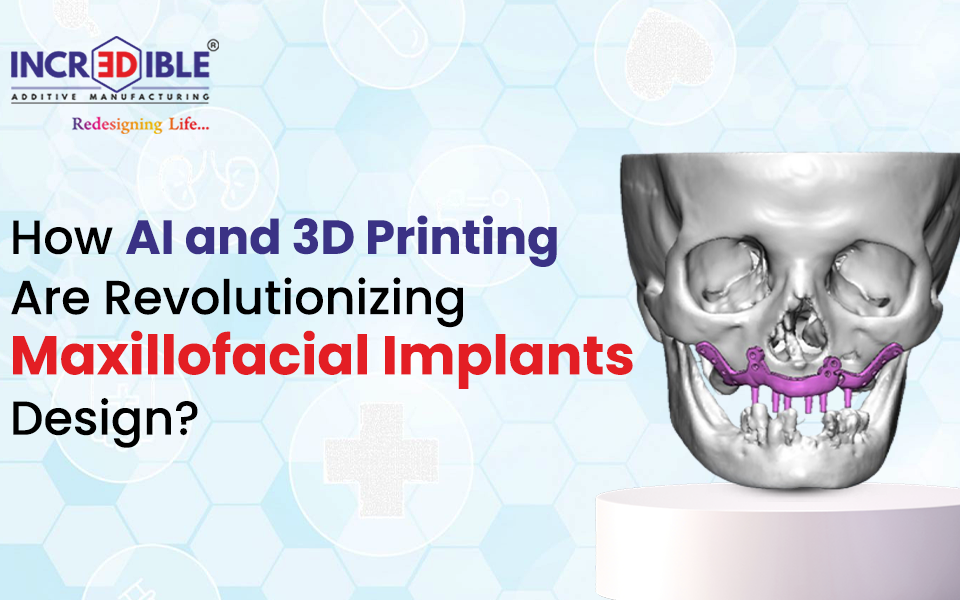
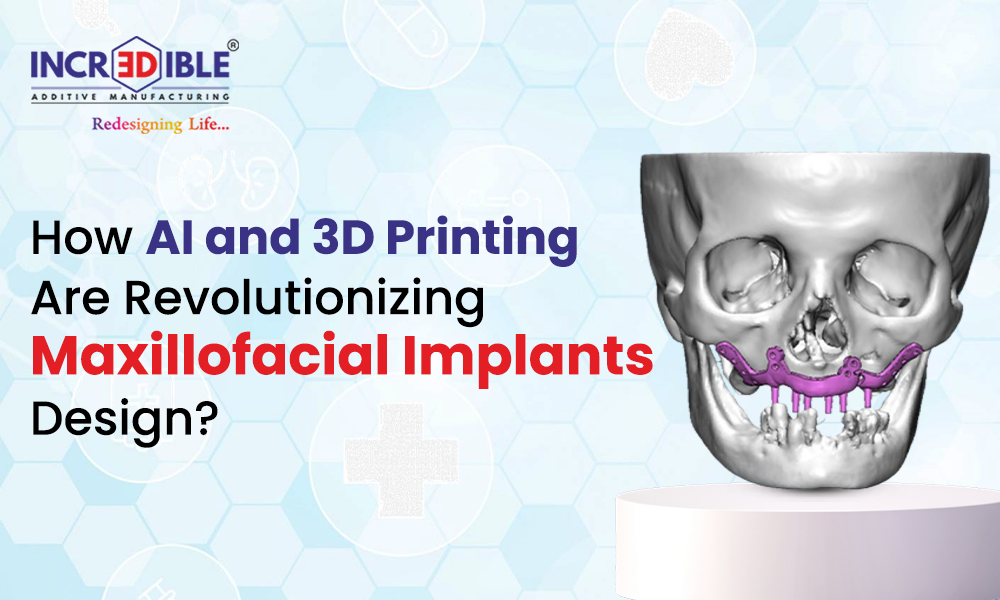
For example, if a tumour in the lower jaw has been removed, the surgeon could use the information from a CT scan of the patient’s jaw to design a specific implant that reflects the individual’s jaw anatomy. These complex designs are designed to be stable and fit precisely into the reconstruction area, thanks to the material’s mechanical properties.
“The combination of 3D design technology and Grade 23 titanium helps create implants that closely match each patient’s unique anatomy.”
Proven Use in Medical Implant Applications
Grade 23 titanium is not only reliable for mandible implants. It has been successfully used in several medical specialties, which is why it is trusted for critical procedures.
Its strength is a key advantage in the success of orthopaedic implants, like hip and knee replacements.
It has excellent tissue compatibility that is beneficial to dental root implants.
In spinal fixation systems, the material is used for a long period of time for structural integrity.
Its strength and resistance to corrosion are used in surgical instruments and medical devices.
This has been used in patients for a number of years, leading to confidence for the surgeon in the choice of material for reconstruction of the mandible.
“A material trusted in orthopaedic, dental, and spinal implants provides the confidence needed for complex jaw reconstruction procedures.”
Key Benefits
Enhanced Biocompatibility
The reduced interstitial elements enhance the tissue compatibility, which supports stable integration into the tissue and the durable function of the implant.
Superior Fracture Toughness
It is able to withstand stress and repetitive jaw movement, making it suitable for demanding load-bearing applications.
Outstanding Corrosion Resistance
The grade 23 titanium has good stability in body fluids and will help maintain the structural integrity of the implant for its lifetime.
Can create a 3D customisation when needed.
It is uniquely suited for advanced manufacturing methods to design and fabricate patient-specific mandible implants that have an accurate anatomical fit.
Long-Term Clinical Reliability
It has been widely applied in orthopaedic, dental, and spine implant applications, proving its performance in the medical field.
Conclusion
Despite the emergence of new materials, Ti6Al4V ELI Grade 23 titanium remains one of the most popular materials used for Titanium mandible implant mandible implants due to its advantages:
Very good bone and tissue compatibility.
Class II fracture toughness, for everyday use in the mouth.
Excellent corrosion resistance of the body.
3D-designed patient-specific implants with compatibility. Compatibility with 3D-designed patient-specific implants.
Successful experience with a variety of medical implant applications.
With the ongoing development of personalised healthcare and sophisticated reconstruction methods, grade 23 titanium continues to be a reliable material for safe, durable, and accurate mandibular implants. For advanced mandible implant solutions that focus on accuracy, performance, and patient-specific outcomes, think of 3D Medical.