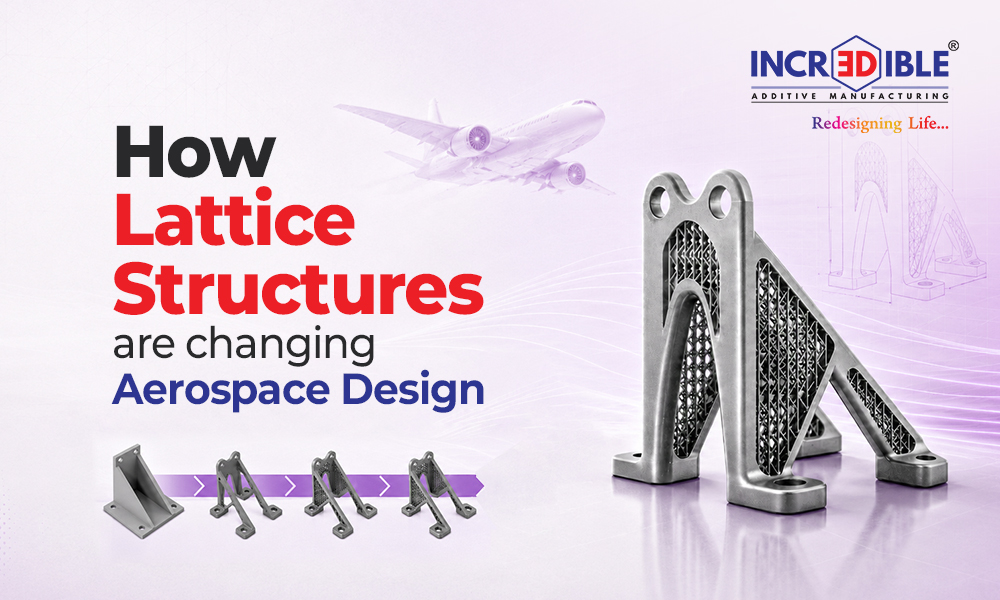
Modern aerospace design is no longer focused solely on making parts stronger. Engineers are increasingly tasked with creating components that deliver high performance while reducing structural mass, improving efficiency, and optimizing material usage. Lattice structures have emerged as a powerful solution to meet these demands. Inspired by naturally efficient forms, these engineered internal geometries help aerospace manufacturers produce parts that maintain strength while using less material. Combined with advanced aerospace 3D printing technologies, lattice structures are enabling new possibilities in aircraft, spacecraft, and unmanned aerial vehicle (UAV) design.
“In aerospace engineering, reducing even a small amount of mass can lead to major improvements in fuel efficiency and overall performance.”
Lightweight Aerospace Parts with Strong Performance
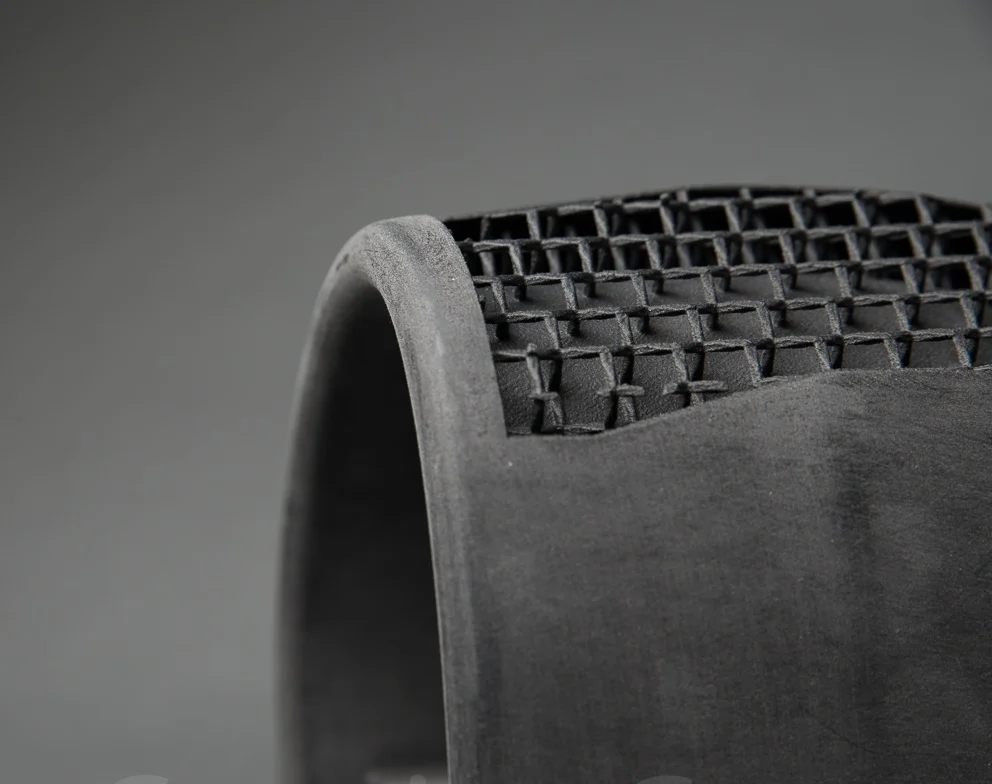
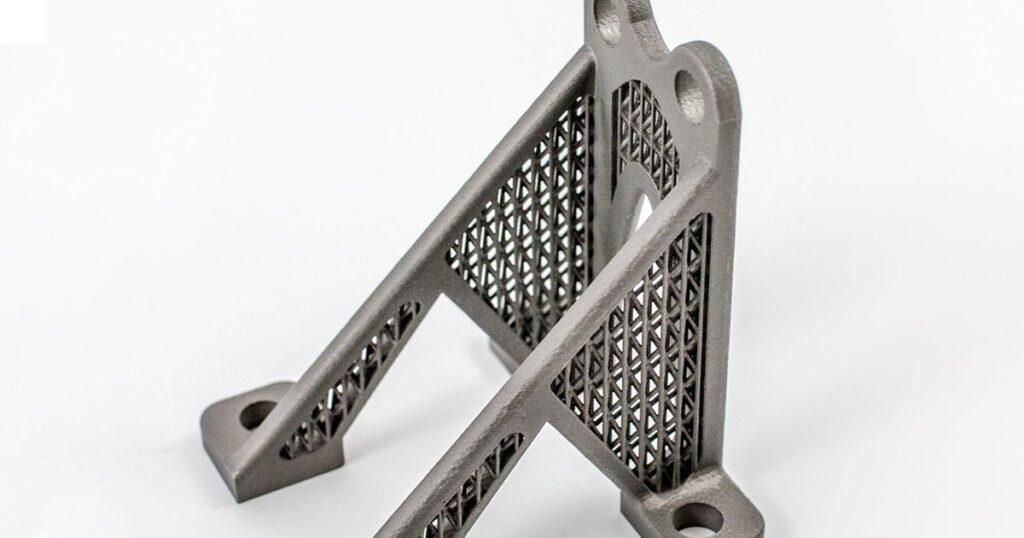
Lattice structures replace solid internal volumes with carefully designed repeating geometries. This approach minimizes unnecessary material while maintaining the mechanical properties required for aerospace applications. The result is a component with a higher strength-to-weight ratio and improved operational efficiency.
Today, lattice structures in aerospace.are being incorporated into satellite mounting brackets, spacecraft support structures, UAV airframe components, aircraft interior panels, and rocket engine components. These applications benefit from lower structural mass without sacrificing durability or reliability. In aircraft, optimized lattice designs are often used in mounting brackets and cabin components to improve fuel efficiency over the life of the aircraft.
Main Advantage
Significant mass reduction while maintaining structural integrity.
Common Applications
Satellite brackets and support structures
Rocket engine components
UAV structural components
Aircraft interior components
Lightweight mounting brackets
Result
Improved fuel efficiency, increased payload capacity, and lower operating costs.
Better Energy Absorption and Safety
Aerospace components must withstand vibration, pressure fluctuations, impact loads, and repeated operational stresses. Lattice structures excel in these environments because they can absorb and distribute energy more effectively than many traditional solid designs.
Aircraft manufacturers increasingly use engineered lattice geometries in seating systems, interior panels, and protective structures where impact resistance and vibration damping are important. Such benefits of lattice structures in aerospace help improve passenger safety while reducing the overall structural burden placed on the aircraft.
“Lattice structures help aerospace engineers create parts that combine structural efficiency with excellent resistance to operational stress.”
Why Lattice Geometry Matters
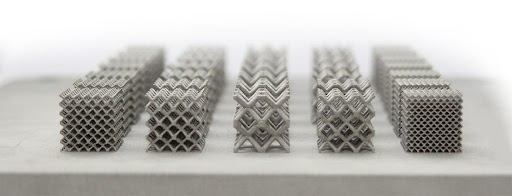
Not all lattice structures perform the same way. Different lattice geometries are selected based on the specific functional requirements of the component.
Common lattice types such as gyroid, octet truss, and diamond structures offer different combinations of stiffness, energy absorption, thermal performance, and material efficiency. Engineers evaluate loading conditions, thermal requirements, and manufacturing constraints when selecting the most appropriate lattice design. This ability to tailor internal geometry allows aerospace manufacturers to optimize components for specific applications rather than relying on traditional solid structures.
Advanced Thermal Management for Aircraft Systems
Thermal management remains one of the most important challenges in aerospace engineering. Engines, avionics, batteries, and propulsion systems generate significant heat that must be managed effectively to maintain reliability and performance.
Lattice structures naturally create large internal surface areas that improve heat transfer efficiency. As a result, aerospace engineers are increasingly incorporating lattice designs into heat exchangers, cooling channels, and thermal management systems.
For example, gyroid-based lattice structures are being used in advanced aerospace heat exchangers because they allow air and fluids to move through complex interconnected pathways while maintaining a compact footprint. Similar designs are also being explored for spacecraft thermal control systems and high-performance aviation electronics.
Main Benefit
Improved heat transfer efficiency.
Used In
Aerospace heat exchangers
Aircraft cooling systems
Spacecraft thermal control systems
Electronic cooling assemblies
Key Feature
Compact structures with high airflow and thermal performance.
“Efficient thermal management is becoming one of the most valuable advantages of lattice-based aerospace design.”
How 3D Printing Makes Lattice Designs Possible
Many advanced lattice geometries are extremely difficult—or completely impossible—to manufacture using conventional machining, casting, or fabrication methods. Additive manufacturing solves this challenge by allowing intricate internal structures to be produced directly from digital designs.
This design freedom enables aerospace manufacturers to create highly optimized components that would previously have required multiple parts, extensive assembly, or costly production methods. Complex internal channels, customized support structures, and advanced lattice geometries can all be produced with remarkable precision through 3D printed aerospace parts manufacturer.
As additive manufacturing continues to mature, lattice structures are expected to play an increasingly important role in aircraft, spacecraft, satellite, and UAV development.
“Without 3D printing, many modern lattice structures would remain impractical or impossible to manufacture efficiently.”
Key Benefits of Lattice Structures in Aerospace
Reduced Structural Mass
Optimized lattice designs help decrease material usage while maintaining performance requirements.
Higher Strength-to-Weight Performance
Lattices provide excellent stiffness and strength relative to their mass, making them ideal for aerospace applications.
Improved Thermal Efficiency
Advanced lattice geometries support better airflow and heat transfer for cooling-critical systems.
Enhanced Vibration and Impact Resistance
Engineered lattice structures absorb and distribute energy effectively, reducing stress on critical components.
Conclusion
Lattice structures are transforming aerospace engineering by enabling designers to achieve levels of performance, efficiency, and optimization that are difficult to achieve with traditional manufacturing methods. Their ability to reduce structural mass, improve thermal management, and enhance energy absorption. This makes them valuable across a wide range of aerospace applications, from satellite components and rocket systems to aircraft interiors and UAV structures.
As aerospace manufacturers continue to pursue lighter aircraft, lower fuel consumption, greater payload capacity, and improved system performance, lattice structures are becoming a critical design strategy. When combined with additive manufacturing, aerospace 3D printing allow engineers to create components that were previously impossible to produce using conventional manufacturing techniques.
Quick Recap
Lattice structures reduce structural mass while maintaining strength.
Aerospace applications include satellite brackets, rocket engine components, UAV structures, and aircraft interiors.
Different lattice geometries provide unique combinations of stiffness, thermal performance, and energy absorption.
Advanced thermal management is a major advantage of lattice-based designs.
3D printing enables the production of complex lattice geometries that cannot be manufactured conventionally.
For organizations exploring advanced aerospace manufacturing solutions, experienced engineering partners can help identify the optimal combination of additive manufacturing, lattice design, and performance-driven component development.