What Role Does CAD and 3D Modelling Play in Cranial Reconstruction Surgery?

What Role Does CAD and 3D Modelling Play in Cranial Reconstruction Surgery

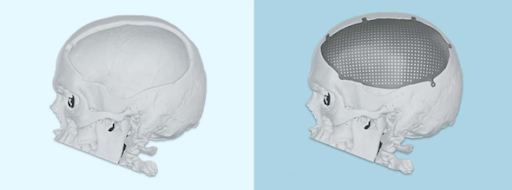
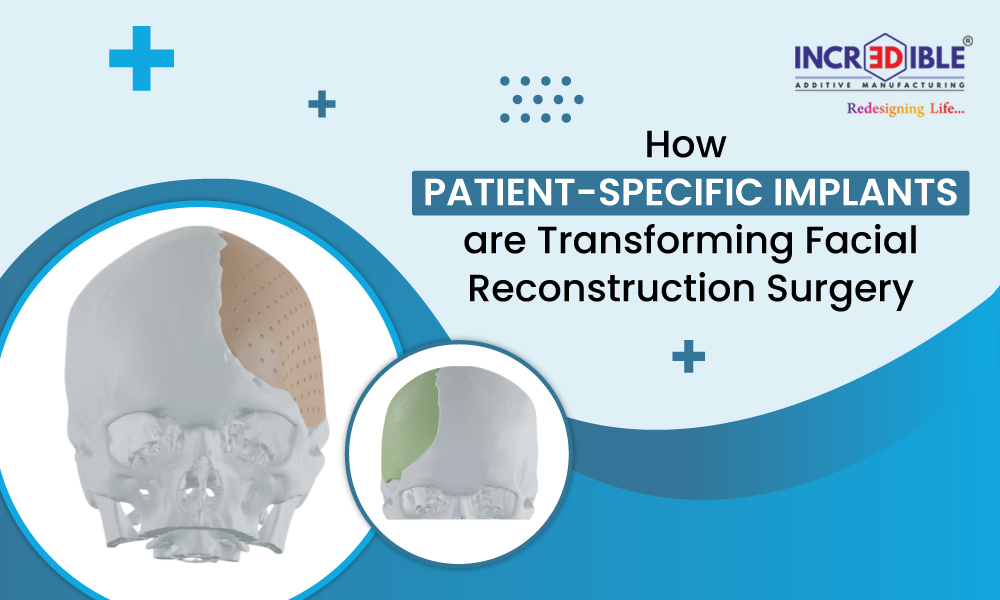
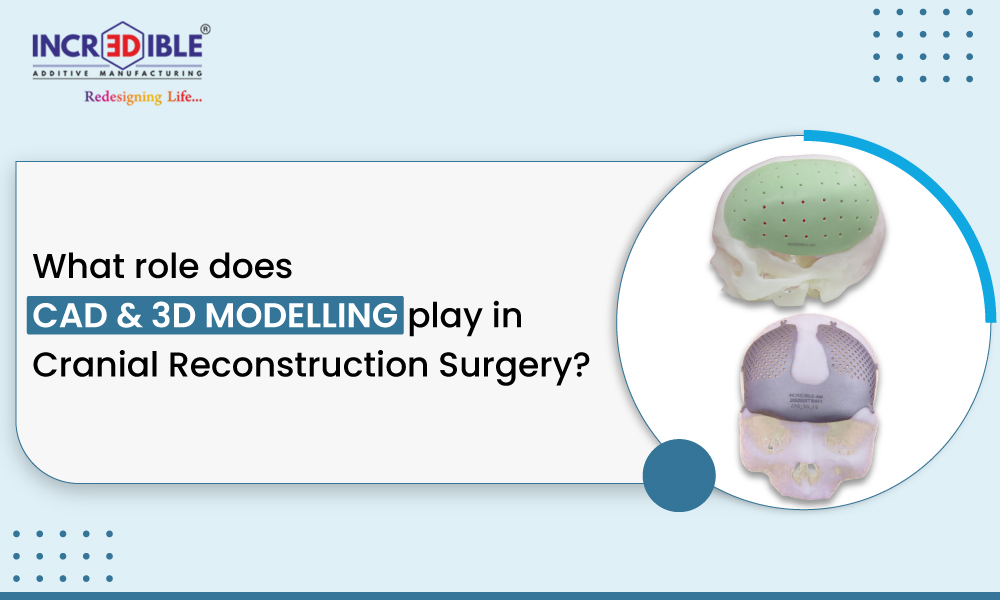
Cranial reconstruction surgery requires a lot of accuracy, customization, and precision. All skull defects are individual and are imprinted by trauma, disease, or a history of surgery. This is the place where CAD (Computer-Assisted Design) and 3D modelling will make a difference in converting the difficult anatomy into the correct solution for the patient with precision.

“Rapid prototyping turns ideas into learning tools, not final guesses.”

Accelerating Design Validation Early

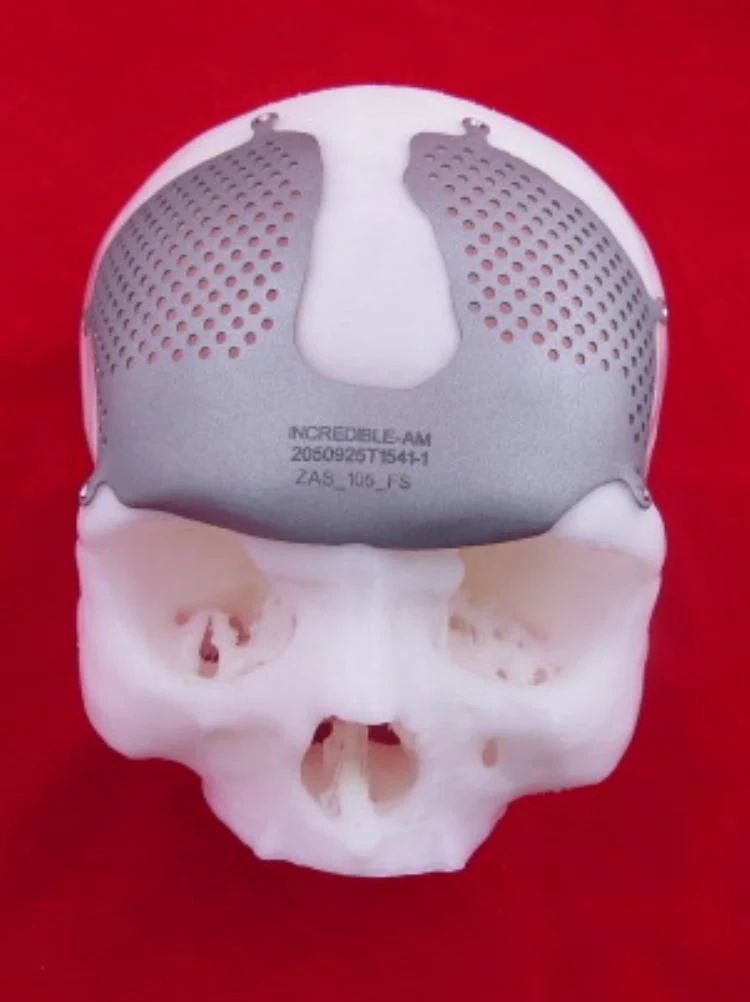
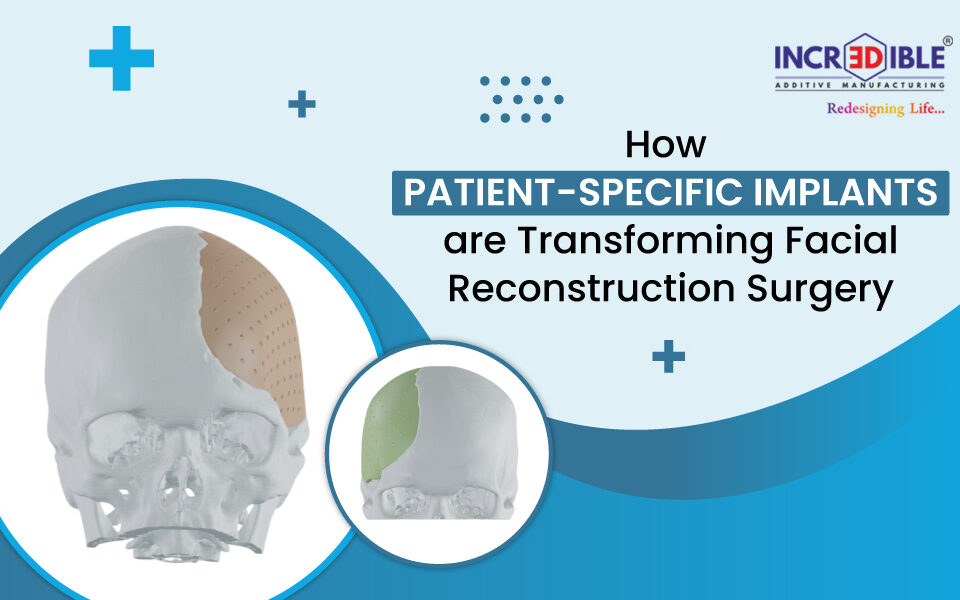
cranial implant

Before mass production, designers must ensure a concept truly works. Rapid prototyping enables early-stage testing, allowing teams to identify design flaws, ergonomic issues, or performance gaps quickly. For example, a consumer electronics housing prototype can be tested for grip, fit, and airflow before tooling investment.

By testing early, teams avoid last-minute redesigns and gain confidence in design decisions. This 3D printed cranial implant loop transforms uncertainty into clarity and supports smarter engineering choices.

Enabling Faster Iterations Through Real Feedback

The CAD and 3D Modelling advantages should be listed beforehand, but it is necessary to realize that digital planning of surgery, as opposed to intraoperative guessing, is simpler and safer to use, as it enables surgeons to emulate how the implants will be placed, detect risk, and make finalized decisions before the procedure.

Precise anatomical contour, minimization of movement of implants, and postoperative complications.

  • There are predefined fixation points, which reduce the errors of intraoperative drilling.
  • Less time spent in surgery, as implants are already surgically ready.
  • The accuracy is predictable when surgery is simulated on a computer.

“The faster you test, the faster you improve—and rapid prototyping makes that possible.”

Reducing Risks Before Final Production

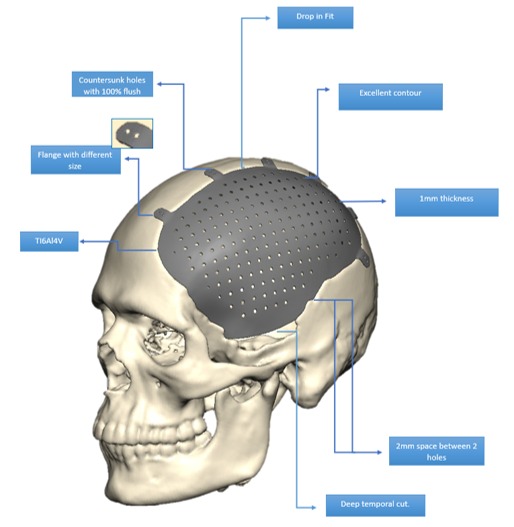
Customization through the use of CAD and 3D Modelling enables implants to be made to mimic the bone thickness, bone curve, and edge transitions. This helps to minimize pressure points, inflammation, and soft tissue adaptation in the post-surgery period.

Personalized designs of implants in cranioplasty procedures aid in the restoration of facial symmetry and aesthetics, in addition to long-term structural stability, which conventional implants are not always able to provide.

Why CAD-Based Simulations Are Important in Complex Cases

The sophisticated cranial reconstruction may contain abnormal defects or prior surgical manipulations. Through 3D printed cranial implant simulations, teams can consider numerous designs of implants and digitally test stress distribution and finalize the safest design.

As an example, an example can be given where the surgeons will be able to simulate the behavior of an implant when subjected to mechanical load before fabrication, and this guarantees durability and success in the long term.

“Testing early isn’t optional anymore—it’s essential for confident production.”

Important CAD and 3D Modelling Advantages of Cranial Surgery

    • Patient-specific fit: 

    Titanium onlays are designed to fit the specific shape of a patient, enhancing comfort, stability, and longer-term acceptance following cranial reconstruction surgery.

    • Less operating time: 

    Ready-built implants will remove the trial and error adjustment, so the surgeons can dedicate all their efforts to accurate positioning and patient safety.

    • Enhanced surgical planning: 

    Virtual simulation allows finding the obstacles at the initial stage, minimizing the risks during surgery, and eliminating postoperative complications.

    • Enhanced aesthetic outcomes:

     Symmetry-based designs re-establish the natural skull contours, which enhance the outcomes of functionality and cosmetic canals.
Conclusion

cranial implants

Cranial reconstruction has been transformed using CAD and 3D modeling, which has substituted the estimating aspect with predictability and precision in digital form.

  • Computerized implant design.
  • Enhanced surgical accuracy
  • Reduced surgery time
  • Improved patient recovery

In the case of a high-technology and patient-centered cranial reconstruction surgery solution, 3D Medical is the most appropriate place to be.

    Comments are closed.

    WhatsApp chat
    Become Channel Partner