Surgeons depend on instruments that help them be more accurate, minimise risks, and improve patient recovery. Custom surgical guides offer that same kind of roadmap. In orthopaedic, dental or spinal surgery, these patient-specific tools are transforming standards because they reduce mistakes and enhance results.
“Think GPS, but for surgery — clearer moves, safer outcomes.”
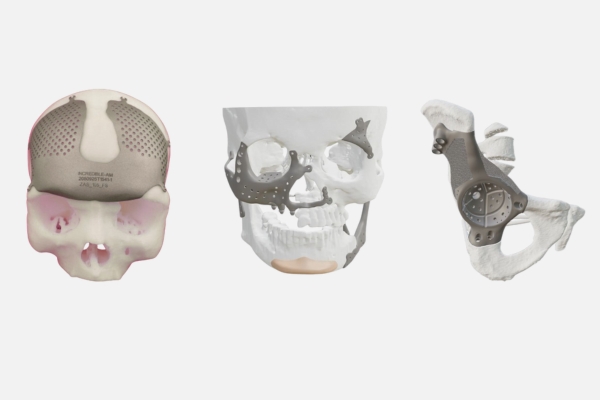
Created through advanced imaging and 3D printing, the guides give surgeons a roadmap to operate with greater confidence and consistency.
Key Benefits at a Glance
A quick look at what custom surgical guides bring to the operating room:
Precision fit: Guides are tailored from CT/MRI scans for patient-specific accuracy.
Streamlined procedures: Complex steps become simpler and faster to execute.
Reduced risk: Lower chance of surgical errors or complications.
Enhanced patient experience: Less trauma, quicker recovery, better long-term results.
Each point above directly contributes to a safer, more predictable and more efficient surgical process.
1. Improved Accuracy – Custom Surgical Guides Fit Like a Glove
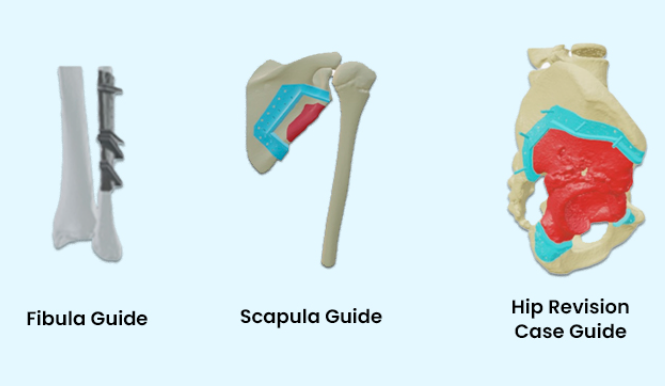
Custom surgical guides are designed to match each patient’s unique anatomy, usually from CT or MRI scans. This ensures an ideal fit for every situation.
Exact bone cuts: In complex knee replacements, patient-specific guides ensure the angle of bone cuts is right from the first attempt.
Precision tool paths:3D-printed surgical guides provide exact routes for tools and implants, removing trial and error.
Fewer complications: Such accuracy minimises mistakes, reduces surgery time and produces more consistent patient results.
2. Automating Complex Procedures – Turning Plans into Practice
Patient specific surgical guides make the process easier in surgeries where the slightest slip Patient-specific surgical guides simplify surgeries where even a small slip can have lasting effects.
They:
Translate digital plans into real surgery: The surgeon’s pre-planned cuts and implant angles are built right into the guide.
Enable difficult procedures: Operations once seen as complex can now be performed more efficiently.
Boost overall surgical accuracy: By minimising uncertainty, they improve real-world execution.
Short example: In spinal fusion, guides ensure screws are placed exactly as mapped in the digital plan, reducing revision surgeries.
These guides improve not only technical accuracy but also patient recovery.
Less trauma: Dental implant patients often report less swelling when guides are used.
Faster discharge: Patients usually spend less time in hospital.
Higher comfort & success: Procedures align to each patient’s specifics, improving long-term outcomes.
Conclusion – Precision Meets the Future of Surgery
Custom surgical guides signal a shift to safer, faster and more personalised surgery. They combine imaging and 3D printing to give surgeons the equivalent of a GPS for each patient.
Quick recap:
Tailored guides boost accuracy from the very first cut.
Complex procedures are simplified and more predictable.
Patients recover faster with fewer complications.
Healthcare teams gain confidence and consistency in outcomes.
By integrating these guides, hospitals and clinics can set a new benchmark in surgical precision. Consider 3D Medicals for advanced 3D printed surgical guide solutions and bring this next-level accuracy to your practice.