What is Rapid Prototyping?

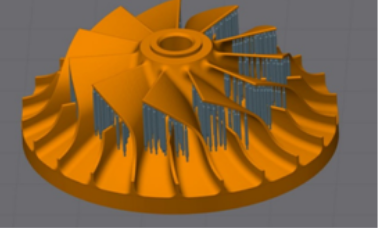
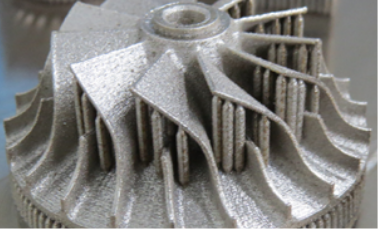
Product development is becoming competitive every day and companies are striving to launch their new products at the earliest, therefore companies are looking for effective options to design new products and manufacture them in a small quantity at shortest time possible. Rapid prototyping is almost a tool less process of manufacturing such small quantities. In this process, customers are required to come up with a CAD design which is an input to rapid prototyping machine. Software package slices the CAD model in thousands of small layers to produce it in the machine. The parts produced are functional and can be tested under severe conditions for validations. Most importantly, rapid prototyping process omits long supply chain, design and procurement of tools and need of costly equipment setup that consequently saves huge time, cost and efforts of product development process.


Benefits

  • Significant reduction in part/assembly supply chain
  • Reduction in product development cost by up to 60%
  • Reduction in product development time by up to 80%
  • Prototype & small Batch quantity
  • Reduce design time/cost and development/procurement of tooling

Application Industries


Process
Frequently Asked Question

What is rapid prototyping in engineering?
Rapid prototyping is a fast manufacturing process that converts CAD designs into physical models using technologies like 3D printing, allowing quick design validation and testing.
What are the advantages of rapid prototyping?
It reduces product development time, lowers costs, enables quick design iterations, and helps identify design flaws early.
Which technologies are used in rapid prototyping?
Common techniques include FDM (Fused Deposition Modeling), SLA (Stereolithography), SLS (Selective Laser Sintering), MJF (Multi Jet Fusion), and CNC Machining. Each offers different benefits in terms of accuracy, surface finish, strength, and material options.
Which industries use rapid prototyping the most?
Industries include automotive, aerospace, medical, consumer products, electronics, and industrial engineering.
Can rapid prototyping be used for small batch production?
Yes, it is ideal for low-volume manufacturing, pilot runs, and customized parts without tooling investment.
How does rapid prototyping reduce product development time?
It eliminates the need for molds or tooling, enabling designers to quickly turn CAD models into physical parts — often within hours or days instead of weeks. This accelerates testing, improves design decisions, and shortens overall time to market.
Is rapid prototyping suitable for metal and plastic components?
Yes — both plastics and metals can be prototyped using appropriate technologies (e.g., SLS/MJF for plastics and DMLS/SLM for metals) for engineering and functional applications.
How long does it take to create a prototype using rapid prototyping?
Lead times vary with part size and technology, but many prototypes can be produced within a few hours to several days, enabling faster design iterations.
How accurate are rapid prototyping models compared to final production parts?
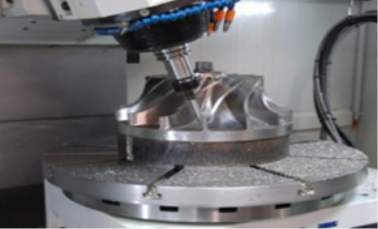
Accuracy depends on the technology used. SLA and SLS can achieve tight tolerances suitable for detailed engineering validation, while CNC prototyping can match final production tolerances for precise mechanical parts.
How does rapid prototyping reduce product development time?
It eliminates the need for molds or tooling, enabling designers to quickly turn CAD models into physical parts — often within hours or days instead of weeks. This accelerates testing, improves design decisions, and shortens overall time to market.

Our Recent Blogs

WhatsApp chat
Become Channel Partner