What is Reverse Engineering?

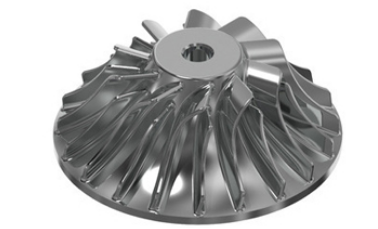
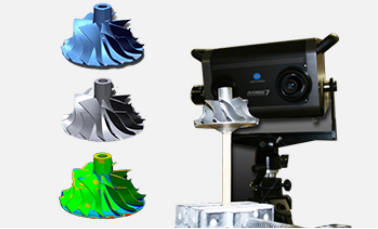
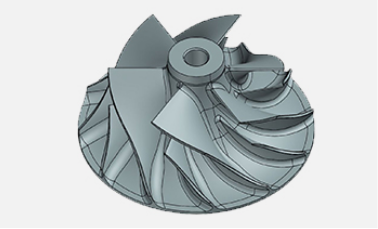
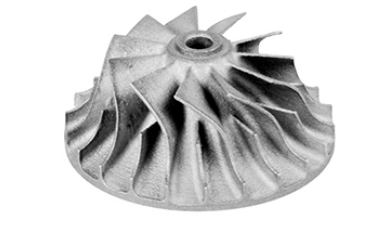
Advancement in laser technology has enabled us to scan a 3 dimensional part and convert it into the CAD file. In many industries, old machines are idle as a machine part had failed previously and the company couldn’t get the part from its original manufacturer. In such cases, the part can be scanned, and 3D printed which would switch ON the machine. The part even can be redesigned for better efficiency in operation. Lattice structure can be incorporated, or topology of the part can be optimised to reduce the weight of the part. In aerospace industry, Engine overhauling is a challenge where Engine parts need to be repaired or replaced. Mostly, aerospace components are designed and manufactured outside of India, and getting those parts from overseas may take a long time and a bulky cost. Those replacement parts can be Reverse Engineered, and 3D printed.


Benefits

  • Produce obsolete parts
  • Produce complex existing parts without having to design it in a CAD software
  • Reduction in machine downtime
  • Improve efficiency of existing parts
  • Material and cost saving

Application Industries

Aerospace
Defence
General Engineering
Oil and Gas
Energy
spare parts

Process

Frequently Asked Question

What is reverse engineering in engineering?
Reverse engineering is the process of analyzing an existing physical part to recreate its digital CAD model. At 3Dincredible, this is done using advanced measurement and 3D scanning techniques to accurately capture geometry for redesign, reproduction, or improvement.
What are the benefits of reverse engineering?
Reverse engineering helps recreate obsolete parts, reduce development time, improve existing designs, and eliminate the need for original drawings or CAD data.
What technologies are used in reverse engineering at 3Dincredible?
3Dincredible uses 3D scanning, precision measurement tools, and CAD software to capture accurate geometries and convert them into manufacturable digital models.
Can reverse engineering be used to recreate damaged or obsolete parts?
Yes, reverse engineering is ideal for reproducing worn-out, broken, or discontinued parts when original drawings or spare parts are unavailable.
Can reverse engineering help improve an existing product design?
Yes, reverse engineering not only recreates parts but also enables design optimization, weight reduction, performance improvement, and manufacturability enhancement.
How does reverse engineering support 3D printing and manufacturing?
Reverse-engineered CAD models can be directly used for additive manufacturing or CNC production, enabling faster prototyping, low-volume production, and part customization.
What is the difference between reverse engineering and CAD design from scratch?
Reverse engineering starts from an existing physical part, while CAD design from scratch starts from concept drawings or specifications without a physical reference.
Can reverse engineering be done without original drawings or CAD files?
Yes, reverse engineering is specifically used when original drawings or CAD data are unavailable, using physical parts as the reference.
Can reverse engineering improve part performance or durability?
Yes, once a part is digitized, its design can be optimized for strength, weight reduction, or improved manufacturability.
Can reverse engineering be used for customization or part modification?
Yes, once the CAD model is created, it can be modified to suit custom dimensions, design improvements, or new applications.
WhatsApp chat
Become Channel Partner